エスプレッソ

By Cafesba , 12 January 2026

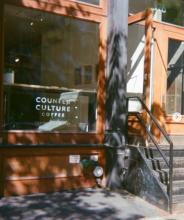
Around the time Portland, Stumptown, and Chicago's Intelligentsia were being established, the third wave of coffee was also emerging in Durham, North Carolina.

Counterculture Coffee is a specialty coffee roasting company based there. Since its founding in 1995, the company has been known for its commitment to education and sustainability. Operating as a wholesale-only roasting company with a nationwide network of training centers, it has become a leading brand in the US specialty coffee industry.

By Cafesba , 11 January 2026

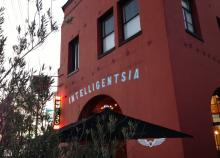
Like Stumptown, Intelligentsia is a company known for pioneering the US coffee third wave movement.

Intelligentsia Coffee was founded in Chicago, Illinois in 1995 and specializes in high-quality, freshly roasted specialty coffee.

Intelligentsia was founded by Doug Zell and Emily Manzi, who moved to Chicago from San Francisco.

The founders were frustrated by the lack of freshly roasted coffee in the city. They opened their first coffee bar on Broadway in the Lakeview neighborhood, selling beans roasted in-house in a vintage Probat roaster to ensure freshness.

By Cafesba , 3 January 2026

In the early 1990s, Starbucks stores in California—especially during hot summers—began experimenting on their own.

Baristas blended coffee, ice, milk, and flavor syrups.

Inspired partly by blended iced drinks popular in the region

One of them was a Frappuccino from a company called Coffee Connection.

The drink concept and the name “Frappuccino” came from Boston-based chain Coffee Connection, where owner George Howell and his team created a blended coffee, milk, sugar, and ice drink in the early 1990s.

By Cafesba , 31 December 2025

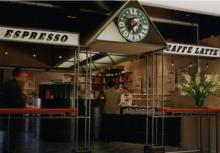
After Howard Schultz became CEO of Starbucks, espresso was not sold as a niche Italian drink. Instead, it was reframed for the American mass market.

He clearly recognized that straight Italian-style espresso was too intense and unfamiliar for most American coffee drinkers of the late 1980s and 1990s, and he adjusted Starbucks’ concept accordingly.

Schultz saw in Milan that Italians happily drank small, strong espressos at bars, while most Americans were used to large cups of relatively weak, “bland” coffee.

By Cafesba , 28 December 2025

The acquisition of Starbucks in 1987 was undertaken by Howard Schultz, the current CEO of Starbucks, in order to realize his vision of Italian-style espresso bar culture in the United States.
Schultz, a former Starbucks employee, was inspired by the local "bar" (stand-up cafe) culture during a business trip to Italy in 1983 and wanted to create a "third place" between home and work in the United States.

By Cafesba , 27 December 2025

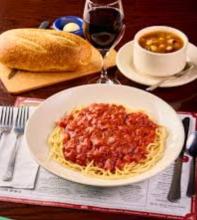
Italian restaurants began to gain popularity in the U.S. around 1970.
High-end restaurants in New York and chains like Old Spaghetti Factory and Spaghetti Warehouse became popular.
Originally, the U.S. was a multi-ethnic nation with a large Italian-American population. However, during this period, the number of Italian restaurant chains nationwide increased, spreading the habit of eating Italian food and experiencing Italian culture among other ethnicities.

By Cafesba , 7 December 2025

Belle Époque ended up by World War I starting.
However, espresso remained popular in Italy.
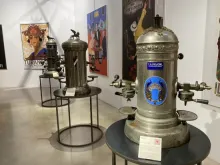
Luigi Bezzera, Desiderio Pavoni, coffee machine developers and coffee roaster such as Luigi Lavazza kept promoting espresso, which remained popular around bars in nortern  industorial cities or large cities in the era in Italy.

タグ

By Cafesba , 29 November 2025

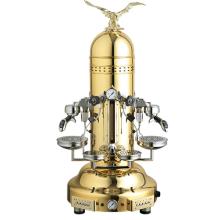
Desiderio Pavoni was a pivotal figure in espresso history who transformed Luigi Bezzera's invention into a commercial success. 
Desiderio Pavoni purchased Luigi Bezzera's patent in 1903, recognizing the potential that Bezzera himself couldn't capitalize on due to lack of financial resources and marketing expertise. 
In 1905, Pavoni founded the La Pavoni company and began producing the espresso machine industrially, manufacturing one machine daily in a small workshop in Via Parini, Milan.

タグ

By Cafesba , 27 November 2025

In Europe, the period from around 1889, when the Paris World's Fair, where the Eiffel Tower was unveiled, to the outbreak of World War I is known as the Belle Époque (Beautiful Era).
This was also a period when various technologies developed due to the Industrial Revolution and artistic movements such as Art Nouveau emerged.
During this time, Luigi Bezzera developed a new espresso machine in Italy.

タグ