
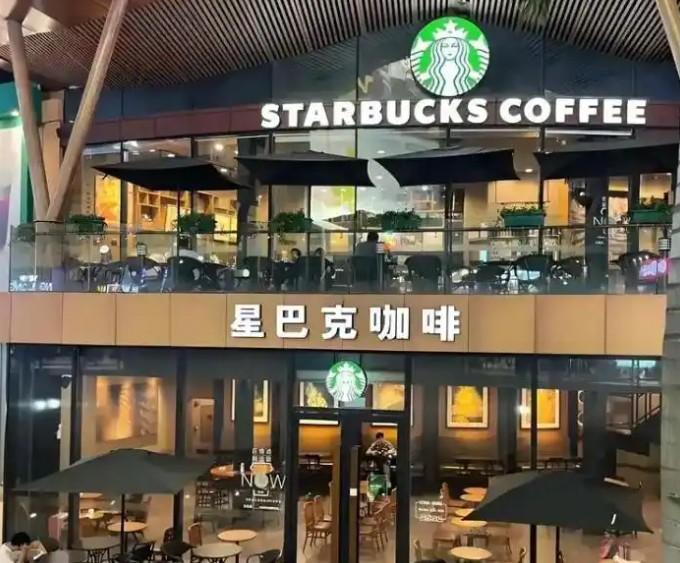
The Jiang Zemin administration, which continued Deng Xiaoping's reform and opening-up policies, and Starbucks
Jiang Zemin became General Secretary of the Communist Party in 1989 following the Tiananmen Square crackdown and served as China's paramount leader until the early 2000s. His era coincided with—and helped enable—the foundational period of China's modern coffee industry, both as a producer and as a consumer market.
After Deng Xiaoping's 1992 "Southern Tour" revived market reforms, Jiang and Premier Zhu Rongji pushed through transformative changes. Zhu launched the privatization of urban housing, which ignited a building boom that transformed Chinese cities into forests of high-rises and propelled economic growth, and after 12 years of negotiations China joined the WTO in 2001, cementing its position as a magnet for foreign investment.
During this boom, the economy grew sevenfold and urban incomes by nearly as much, as waves of rural residents migrated to factory jobs in cities.
This rapid urbanization and the emergence of a middle class created the conditions in which coffee—previously almost unknown in China—could take root.
The consumption side took off in the final years of Jiang's tenure. Starbucks opened its first mainland store in the China World Trade Building in Beijing in January 1999. The move was seen by many as potentially disastrous given China's millennia-old tea culture, and the idea was even called "crazy" by those around Howard Schultz.
What made it succeed was precisely the social transformation that the Jiang-era reforms had produced.
A growing middle class showed interest in Western lifestyles and premium products, and Starbucks positioned itself as a luxury and aspirational brand conveying status that appealed to those seeking to climb the social ladder.
Housing privatization and urbanization also played an indirect role—Chinese customers found Starbucks' comfortable stores to be a welcome extension of home in a country with typically small living spaces.
Entry: Beijing, 1999
Starbucks entered mainland China in January 1999 , opening its first store in the China World Trade Building / China World Trade Center area in Beijing.
Starbucks’ own China site still presents 1999 as the starting point of its mainland history. This was not an obvious success story at the time. China had a strong tea culture, and coffee was still associated more with hotels, foreigners, instant coffee, and a small urban elite than with everyday consumption.
Starbucks did not initially sell “coffee as a cheap drink.”
It sold a Western-style third place: a comfortable, international-feeling place to meet, work, date, or signal middle-class taste.
Regional partner era: late 1990s-2000s
In the beginning Starbucks did not simply operate China directly by itself.
It used regional partners and joint ventures because China was complex, local regulations mattered, and consumer behavior differed by region.
FinanceAsia reported that Beijing Mei Da Coffee was set up in 1999 when Starbucks entered China, under foreign-ownership constraints at the time.
In northern China, Beijing and northern markets, Beiging Mei Da Coffee became the partner.In eastern China, Shanghai, Jiangsu, Zhejiang area, Uni-President became.In southern China, the Maxim's did.
This partner strategy was important because Starbucks had to learn where Chinese urban consumers would pay premium prices, which mall and office locations worked, and how to localize without losing the Starbucks image.
Shanghai and the rise of “urban coffee culture”
Starbucks opened its first Shanghai store in May 2000 on Huaihai Road.
Starbucks later described Shanghai as one of its most important cities globally.
Shanghai mattered because it already had deeper historical associations with cafés, Western restaurants, department stores, and cosmopolitan consumption than many Chinese cities.
In a way, Starbucks did not create Chinese coffee culture from zero; it connected with a reform-era and post-1990s urban middle-class desire for modern, international leisure.
In the 2000s, Starbucks became associated with:
・Coffee signaled global urban taste
・Stores were clean, comfortable, predictable
・Seating and atmosphere mattered for laptop culture
・A Starbucks cup functioned as a status symbol as premium identity.
・Foreign but not intimidating
Localization: tea, mooncakes, design, and Chinese consumers
It added products that fit Chinese taste preferences, including tea-based drinks, seasonal products, and localized food.
It also used Chinese New Year promotions, mooncakes, city mugs, and store designs that incorporated Chinese architectural or cultural references.
Starbucks did not win in China by being purely American.
It won by being American enough to feel aspirational, but local enough to feel familiar.
Yunnan coffee: moving into Chinese coffee production
Starbucks arrived after Nestlé had already helped build Yunnan’s commercial coffee base.
Starbucks’ role was more about upgrading quality, branding, and specialty-style recognition than about starting Yunnan coffee from scratch.
Starbucks also connected itself to Yunnan, China’s most important coffee-growing region.
In 2012, it opened a Farmer Support Center in Pu’er, Yunnan, to work with local farmers on coffee quality, processing, and responsible sourcing practices.
This was strategically important.
Starbucks was not only selling imported coffee culture to China; it was also trying to build a China coffee supply story:Chinese-grown coffee, improved quality, and Starbucks-backed agricultural expertise.
The difference between UBC Coffee, Manabe Coffee, and Starbucks.
The difference between UBC Coffee, Manabe Coffee, and Starbucks.
In 1990s China, modern cafe culture was not yet widespread.
Therefore, establishments like UBC and Manabe were valued less for the coffee itself, and more as "respectable venues" that the urban middle class and businesspeople of the post-reform and opening-up era could utilize.
For example, this meant dim lighting, spacious seating, leather chairs, food menus, coffee served in pots, and an atmosphere conducive to long stays.
Rather than Starbucks, this business model was more akin to a mix of traditional high-end coffee shops, hotel lounges, and family restaurants.
In China, Manabe Coffee was also perceived not as a "Starbucks-style" cafe, but as a Japanese/Taiwanese-style coffee shop where patrons could sit down, stay a while, and order coffee alongside meals and desserts.
Starbucks' strength lay in transforming coffee from a "high-end space for business meetings" into a more everyday part of urban life.
Particularly in China, although it was initially viewed as a premium, trendy, foreign brand, it differed from UBC and Manabe in the following ways:
・It was easy for young people to enter alone.
・It was welcoming and approachable for female customers.
・Office workers could easily get it to go.
・It was a place where people could study or work on their laptops.
・It was accessible to coffee beginners through drinks like lattes and Frappuccinos.
If UBC and Manabe were "heavy coffee shops," Starbucks was a "light urban cafe."
At UBC and Manabe, coffee wasn't necessarily the main attraction. Rather, the emphasis was on the food, desserts, tea, the physical space, and the ease of conducting business meetings.
At Starbucks, while the space is certainly important, the core focus is the commercialization of espresso beverages.
They packaged the entire coffee experience—including the names (latte, cappuccino, mocha, Frappuccino), sizes, customization options, paper cups, and the logo.
コメント