espresso

By Cafesba , 28 December 2025

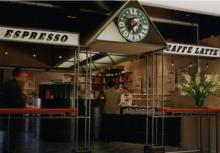
The acquisition of Starbucks in 1987 was undertaken by Howard Schultz, the current CEO of Starbucks, in order to realize his vision of Italian-style espresso bar culture in the United States.
Schultz, a former Starbucks employee, was inspired by the local "bar" (stand-up cafe) culture during a business trip to Italy in 1983 and wanted to create a "third place" between home and work in the United States.

By Cafesba , 27 December 2025

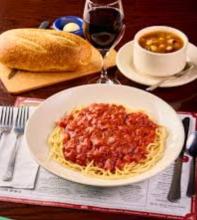
Italian restaurants began to gain popularity in the U.S. around 1970.
High-end restaurants in New York and chains like Old Spaghetti Factory and Spaghetti Warehouse became popular.
Originally, the U.S. was a multi-ethnic nation with a large Italian-American population. However, during this period, the number of Italian restaurant chains nationwide increased, spreading the habit of eating Italian food and experiencing Italian culture among other ethnicities.

By Cafesba , 20 December 2025

Starbucks itself was founded in Seattle in 1971, but initially it was a specialty store selling roasted coffee beans and equipment, not a cafe chain serving espresso drinks. 

Around this time, dark roast coffee, like the Italian roast popular in Europe, was beginning to become popular, influenced by California's Peet's Coffee. 

However, espresso had yet to become widespread. 

Coffee was generally perceived as something to drink cheaply in large cups.

By Cafesba , 7 December 2025

Belle Époque ended up by World War I starting.
However, espresso remained popular in Italy.
Luigi Bezzera, Desiderio Pavoni, coffee machine developers and coffee roaster such as Luigi Lavazza kept promoting espresso, which remained popular around bars in nortern  industorial cities or large cities in the era in Italy.

By Cafesba , 29 November 2025

Desiderio Pavoni was a pivotal figure in espresso history who transformed Luigi Bezzera's invention into a commercial success. 
Desiderio Pavoni purchased Luigi Bezzera's patent in 1903, recognizing the potential that Bezzera himself couldn't capitalize on due to lack of financial resources and marketing expertise. 
In 1905, Pavoni founded the La Pavoni company and began producing the espresso machine industrially, manufacturing one machine daily in a small workshop in Via Parini, Milan.

By Cafesba , 27 November 2025

In Europe, the period from around 1889, when the Paris World's Fair, where the Eiffel Tower was unveiled, to the outbreak of World War I is known as the Belle Époque (Beautiful Era).
This was also a period when various technologies developed due to the Industrial Revolution and artistic movements such as Art Nouveau emerged.
During this time, Luigi Bezzera developed a new espresso machine in Italy.

By Cafesba , 23 November 2025

Giovanni Achille Gaggia (1895–1961) was an Italian inventor who revolutionized espresso coffee. 
Working as a barista in his family's coffee bar, Caffè Achille, in Milan during the 1930s, he became dissatisfied with the bitter, burnt taste of coffee produced by the steam machines of that era .

By Cafesba , 3 October 2025

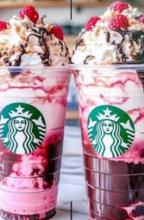
The Frappuccino is an original Starbucks product.
It is a portmanteau of frappe and cappuccino.
A frappe is a cold drink made with crushed ice and can be found in convenience stores and fast food restaurants.
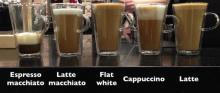
A cappuccino is espresso mixed with steamed milk.
It was first sold at Starbucks in the United States in 1995.
Originally, Starbucks was a store that specialized in coffee, but coffee sales declined in the summer, so the Frappuccino was launched as an opportunity to sell cold drinks.

Tags

By Cafesba , 3 October 2025

Now that we've talked about espresso, I'd like to write about cappuccino as well.
How is cappuccino different from regular coffee?
And how is it different from espresso?
Cappuccino is coffee milk with an espresso base.
You could say it's espresso milk.
As I mentioned here, espresso is richer and more fragrant than regular coffee.
Also, the milk used in cappuccino is steamed milk, which is milk heated and frothed with steam.
By exposing the milk to high-temperature steam, fine bubbles containing air are created, bringing out the sweetness.

Tags