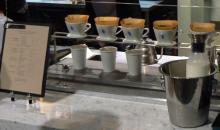
Third-wave coffee

By Cafesba , 18 January 2026

Blue Bottle Coffee founder James Freeman's immediate interest in Japanese coffee shop culture was sparked by a 2008 tour of Tokyo coffee shops accompanied by a friend who worked at UCC in San Francisco.

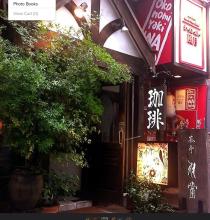
He credits his visit to coffee shops such as "Chatei Hatou" in Shibuya, "Cafe de Rambre" in Ginza, and "Daibo Coffee Shop" in Omotesando, which he visited with his friend, who also worked at UCC in San Francisco, as a turning point for him.

By Cafesba , 17 January 2026

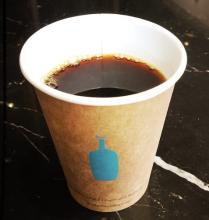
The third wave movement gained momentum in the 1990s, but Blue Bottle Coffee, founded after 2000, is another pioneering third wave coffee shop committed to transparency in its origins, and has now become a global phenomenon.

Blue Bottle Coffee was founded in 2002 in Oakland, California, by freelance clarinetist James Freeman.

Freeman began his business by roasting small batches in a 186-square-foot (approximately 17 square meters) flower shed and delivering the beans to local customers by bicycle.

By Cafesba , 12 January 2026

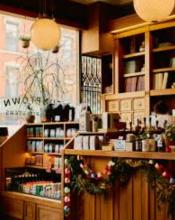
Around the time Portland, Stumptown, and Chicago's Intelligentsia were being established, the third wave of coffee was also emerging in Durham, North Carolina.

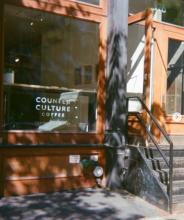
Counterculture Coffee is a specialty coffee roasting company based there. Since its founding in 1995, the company has been known for its commitment to education and sustainability. Operating as a wholesale-only roasting company with a nationwide network of training centers, it has become a leading brand in the US specialty coffee industry.

By Cafesba , 11 January 2026

Like Stumptown, Intelligentsia is a company known for pioneering the US coffee third wave movement.

Intelligentsia Coffee was founded in Chicago, Illinois in 1995 and specializes in high-quality, freshly roasted specialty coffee.

Intelligentsia was founded by Doug Zell and Emily Manzi, who moved to Chicago from San Francisco.

The founders were frustrated by the lack of freshly roasted coffee in the city. They opened their first coffee bar on Broadway in the Lakeview neighborhood, selling beans roasted in-house in a vintage Probat roaster to ensure freshness.

By Cafesba , 10 January 2026

In the 1990s, Starbucks became a place that offered a "third place," with Frappuccinos and cappuccinos taking center stage, and espresso and blended coffees becoming ingredients on the menu rather than the main focus.

At the same time, specialty coffee culture, a reaction against commodity coffee, was beginning to spread in the United States. A genre known as the "third wave" was born, offering carefully crafted specialty coffee in a format similar to the coffee bars that Starbucks' Howard Schultz was initially inspired by in Italy.