
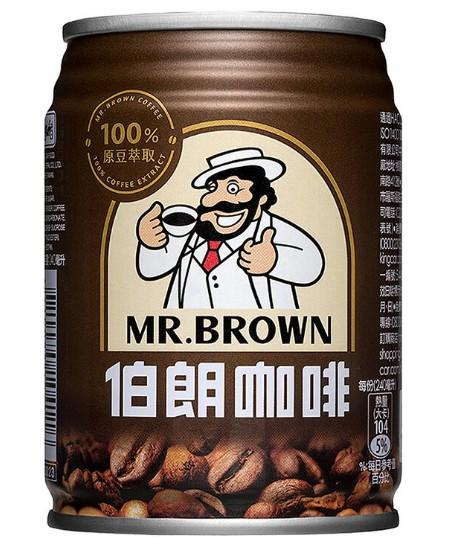
In 1976, Chiang Ching-kuo—who had succeeded his father Chiang Kai-shek as the President of Taiwan—completed the "Ten Major Construction Projects" of the 1970s and launched the even larger public works initiative known as the "Twelve Major Construction Projects" in 1980.
During the early 1980s, the entirety of Taiwan resembled one massive construction site, marking the era when the nation's logistics arteries truly began to pump. The Ten Major Construction Projects gave birth to hundreds of thousands of "newly emerging manual laborers" engaged in shipbuilding, steelmaking, highway construction, and petrochemicals.
Furthermore, in 1987—during Chiang Ching-kuo’s later years—the martial law that had been in place for 38 years since 1949 was finally lifted. Media outlets such as broadcast stations, newspapers, and magazines were liberalized, diversifying the vehicles available for advertising. The advertising market shifted from a "seller's market" dominated by a limited number of media outlets to a competitive market where advertisers could freely select their preferred platforms.
It was under these circumstances that a massive canned coffee market took shape in Taiwan.
The Birth of Mr. Brown Coffee
Lee Tien-tsai, the founder of King Car, suffered heavy financial losses with his very first beverage product, Mai-Gen Sarsaparilla (Root Beer). Afterward, drawing lessons from the major Japanese coffee manufacturer UCC, he made the bold decision to abandon the already mature carbonated soft drink market and pivot toward canned coffee.
At the time, Taiwan could be described as a "coffee desert," and industry insiders were deeply skeptical of the market's potential. Before Mr. Brown Coffee arrived, companies like Wei Wang had already launched a canned coffee called Jin Cafe ("Gold Coffee") in 1976. However, the products of that era were closer to milk coffee heavily laden with sugar and milk; they didn't look like real coffee so much as "slightly bitter, mysterious coffee milk." Those seeking authentic coffee dismissed it as "too sweet to drink," while those who wanted a sweet dairy beverage reasoned, "If that's the case, I'd rather buy a cheap, fresh paper carton of Wei Chuan Fruit Milk."
What Lee Tien-tsai set his sights on was the Japanese market. Noticing the massive popularity of canned coffee in Japanese vending machines, he boldly predicted: "As Taiwan’s industrialization progresses, the demand among laborers and office workers for something 'handy' to 'fight off sleepiness' is going to explode."
Extraordinary effort was poured into selecting the brand name for the launch. Employees flipped through dictionaries and used computers to generate character combinations, producing over 2,000 candidate names that stacked over 15 centimeters high on A4 paper. The selection criteria required the name to have clear pronunciation, stable visual form and meaning, a Western ring reminiscent of an imported good, and a concrete, personified image.
Thus, the name "Mr. Brown / 伯朗" was chosen. Simultaneously, executing a multi-brand strategy, the company rolled out over a dozen sub-brands at once, including "Coffee Bus," "Red Indian Coffee," and "New York Coffee."
Marketing Innovations
Taking into account that Taiwanese people at the time were not accustomed to bitter black coffee, the flavor was adjusted to feature a rich milkiness and a moderate sweetness. The company discarded the image of a "luxury item" and adopted the approachable mascot "Mr. Brown"—a friendly character sporting a mustache, a warm smile, and a thumbs-up.
The advertising aimed squarely at "drivers, blue-collar workers, and overtime-working office employees." The catchphrase "It’s 8:30, time for a cup of Mr. Brown Coffee!" struck a deep chord in the hearts of exhausted people.
Through a hands-on service model where sales staff assisted retail stores with everything from purchasing to shelf stocking, the company steadily built out its distribution channels despite the heavy cost in time and manpower. Immediately upon its release in 1982, it captured over 60% of the market share, becoming the undisputed leading brand in Taiwan's coffee market.
Freight truck drivers, in particular—who had previously relied on betel nuts (binglang) to stay awake—embraced the convenience of canned coffee. Unique distribution channels naturally emerged; for instance, cleaning contractors servicing public restrooms in major Taipei markets began selling Mr. Brown Coffee on the side, where it wasn't unusual to move over 10 cases in the early morning hours alone. In 1983, the product won the Special Excellence Award at the National Food Exhibition.
Competitors Enter, Solidifying Taiwan's Canned Coffee Culture
By 1985, witnessing Mr. Brown Coffee’s triumph, rival companies entered the fray in earnest. In May of that year, HeySong launched O-Hsiang Coffee, hiring popular singer Irene Yeh to star in a heavily broadcast TV commercial filmed in Paris. In June, Japan's UCC Ueshima Coffee (from whom Lee Tien-tsai had once learned) and Taiwan's Wei Chuan jointly established the UCC Coffee Taiwan Co., Ltd. Other brands like Uni-President Coffee, AIMA Coffee, and ROSA Coffee also joined the market competition.
As the rivalry heated up:
- TV commercials multiplied
- Retail shelf space dedicated to canned coffee expanded
- Brand-driven image warfare intensified
- Consumers gained the freedom to choose between multiple products
- "Canned coffee" became a socially recognized product category
While the emergence of rivals appeared disadvantageous for Mr. Brown at first glance, from the perspective of market formation, the collective advertising spend of these competing firms massively elevated the general public's awareness of canned coffee.
Rival Company (1): Uni-President Coffee
Uni-President Enterprises is Taiwan’s largest food and beverage conglomerate—the very same enterprise that would later bring Starbucks to Taiwan in 1998. Beyond its food and beverage production network, Uni-President owned President Chain Store Corporation, the operator of 7-ELEVEN. Taiwan’s first 7-ELEVEN opened in 1980, reaching 100 locations by 1986.
The most pivotal "Uni-President Coffee" product of the 1980s was Mine Shine (Cafe Plaza), launched in 1986. Introduced in foil-lined paper cartons (known locally as lübo bao), Mine Shine was not designed to drag Mr. Brown down from the canned coffee throne; rather, it expanded the market from "canned coffee for adult laborers" to "sweet carton coffee that students could afford."
The product offered clear advantages:
- Lightweight paper packaging
- Easier to keep retail prices low
- Ready to drink instantly with a straw
- Strongly sweetened, making it easy for coffee beginners to drink
- Easy to stock in school tuck shops and youth-oriented retail channels
(They subsequently released a canned version of it as well.)
Rival Company (2): AIMA Coffee
AIMA Coffee was a coffee beverage manufactured and sold by Nan Ya Food, the company famous for Vitalon (Wei Da Li) soda. Nan Ya Food was a long-standing enterprise dealing in carbonated drinks, juices, and canned beverages.
Vitalon is a golden carbonated drink with a strong sweetness and a distinct flavor profile carrying hints of citrus and aromatics—a "nutritional carbonated drink" quite different from standard colas or ciders. Officially, the company explained that its bright yellow hue did not come from artificial coloring, but derived naturally from Vitamin B2.
From the late 1970s Ten Major Construction era onward, Vitalon permeated deeply among factory workers, construction laborers, and agricultural workers. A particularly famous local custom involves mixing Vitalon with medicinal or tonic alcoholic drinks like Paolyta-B. In Taiwan, this is colloquially referred to as "Gongdi Tiaojiu"—literally, "Construction Site Cocktails."
Given that Lee Tien-tsai had also sold root beer before entering the coffee business, carbonated drinks were already well-anchored in Taiwan. Both Vitalon and Mr. Brown Coffee were beverages that paired exceptionally well with factories, construction sites, drivers, and traditional mom-and-pop stores. Nan Ya Food simply attempted to introduce a coffee beverage to the exact same labor market it was already reaching via Vitalon.
However, unlike Mr. Brown Coffee with its bearded, uncle-like mascot, AIMA Coffee took its symbol from traditional, elegant European female iconography. This mismatch in branding was likely a key factor behind why construction workers and truck drivers maintained a much higher support rate for Mr. Brown. Nan Ya Food eventually retired the AIMA Coffee brand, pivoting later to sell Vitalon Sugar-Free Black Coffee—an uncompromising, jet-black, authentic unsweetened coffee.
Rival Company (3): ROSA Coffee
The parent entity that gave birth to ROSA was the Nice Enterprise Group, a massive conglomerate originating in Chiayi. This was the powerhouse behind hit Taiwanese personal care products like "566" shampoo and "PAOS" dishwashing liquid. Backed by the massive cash reserves of its chemical division, the group established ROSA Foods in 1988.
With King Car’s Mr. Brown locking down "working-class uncles and betel nuts," and Uni-President’s Mine Shine capturing "kids at cram schools," the battlefield ROSA chose to contest was "the dating culture of the 'New Human Race' at the peak of the bubble economy."
Hiring the trendy actors and top actresses of the day, ROSA poured budget into high-end commercials depicting scenes like "a rainy street corner in Paris" or "a man and woman whose eyes meet as they pass each other"—looking as though Japan’s hit drama Tokyo Love Story had been transplanted directly into Taiwan. They flooded prime-time television with these ads day after day.
Where manual laborers popped open a can of Mr. Brown, ROSA claimed the symbolic territory of "the coffee you put in the car cup holder when taking a girl out for a night drive to Yangmingshan," achieving a massive breakout among the youth demographic in the early 1990s.
Post-Martial Law: From Functional Specs to High-Level Brand Image Warfare
Mr. Brown’s early advantages were rooted in pure utility:
- Quick to drink on the job
- Fights off sleepiness while driving
- Sweet enough to replenish energy
- Cheaper than going to a coffee shop
- Portable because it’s in a can
However, as competitors proliferated, these functional attributes alone could no longer explain the difference between products. Consequently, each company gradually crafted distinct lifestyle imagery.
Around the lifting of martial law, young people began expressing themselves far more freely regarding politics, music, romance, fashion, and foreign culture. This societal shift paired perfectly with products like Uni-President's Mine Shine—a sweet, low-cost beverage that reached beyond Mr. Brown's core base of drivers and laborers to resonate with students and young consumers.
Young people did not necessarily consume coffee as an "authentic, bitter beverage"; rather, they embraced it as a product to:
- Drink together with friends
- Buy on the way home from school
- Enjoy alongside music and magazines
- Feel a sense of maturity and urban sophistication
As the values and lifestyle choices of the youth expanded, corporations inevitably began treating them as a distinct, independent consumer stratum.
コメント