
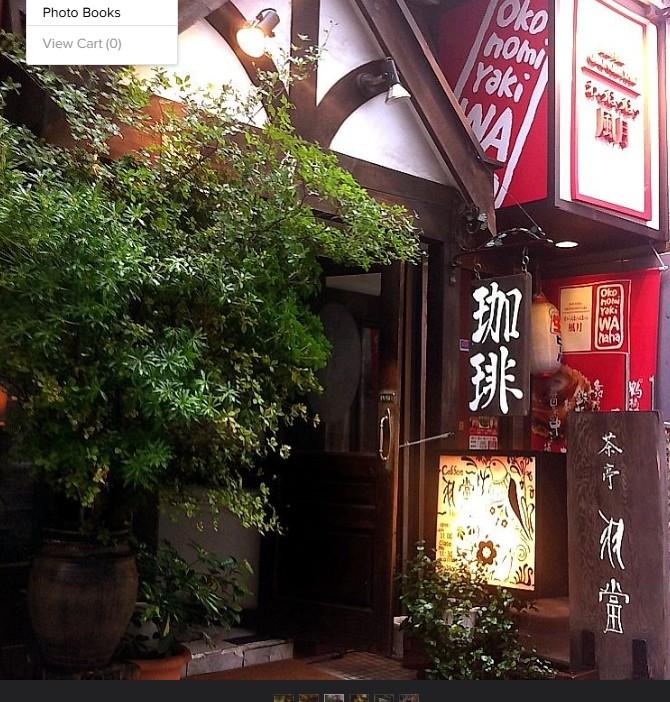
Blue Bottle Coffee founder James Freeman's immediate interest in Japanese coffee shop culture was sparked by a 2008 tour of Tokyo coffee shops accompanied by a friend who worked at UCC in San Francisco.
He credits his visit to coffee shops such as "Chatei Hatou" in Shibuya, "Cafe de Rambre" in Ginza, and "Daibo Coffee Shop" in Omotesando, which he visited with his friend, who also worked at UCC in San Francisco, as a turning point for him.
Freeman explains that he was inspired by elements of Japanese coffee shops, such as their "industrious and elegant atmosphere," their hand-brewed coffee, and their attentive service, and that he extracted their best elements to design Blue Bottle.
As a result, Japanese coffee shops were an integral part of Blue Bottle's identity even before the company entered the Japanese market.
Chatei Hatou:
Chatei Hatou is a Shibuya coffee shop that James Freeman described as "the most impressive place in Japan" and "the best cafe in the world."
Located on the first floor of a building just a few minutes' walk from Shibuya Station's east exit, manager Kazuya Terashima, who says he "loves coffee and drinks five to six cups a day," has been a barista there since the shop opened in 1989.
With its wood-grain interior, low lighting, and quiet classical music, the cafe is characterized by a calming atmosphere that seems secluded from the hustle and bustle of the city.
Freeman highly praises the cafe's hospitality and attitude toward coffee.
In particular, he says that the cafe's careful hand-dripping of each cup, its attentive selection of cups for each customer, and its quiet service all influenced the creation of his own cafe.
The cafe offers hand-dripped medium to medium-dark roasted coffee made with charcoal-roasted beans, with a focus on the cafe's original "Hato Blend." Its fragrant yet clear and smooth flavor is highly praised.
With cups from brands like Wedgwood and Meissen lining the shelves, baristas select the perfect cup based on the customer's mood and attire, a style described as "a unique experience."
Café de Rambre:
Café de Rambre is a long-established coffee shop in Ginza that James Freeman cites as "one of his favorite places," making it an essential part of his view of Japanese coffee shops.
Located in Tokyo's Ginza district, this specialty shop, known for serving only coffee, was founded in 1948, shortly after the war.
In particular, he is deeply interested and respectful of the cafe's ability to brew complex, delicious coffee using dark roast beans, saying that it changed his mind and made him realize that "dark roasts could be so delicious."
The shop was opened by Ichiro Sekiguchi, who passed away in 2018 at the age of 103. He is a coffee legend highly respected by coffee lovers all over Japan.
Having majored in acoustic engineering at university, Sekiguchi was exempt from conscription due to his technician status and joined the weapons repair unit in Korakuen. It was during his time there that he found coffee beans among US military supplies, roasted them in his own way, and served them to his comrades. Many of the beans available at the time were of poor quality, so he devoted himself to research, even sacrificing sleep, to find a way to brew a delicious cup of coffee.
While Blue Bottle Coffee touts the "freshness of freshly roasted coffee," Café de Rambre's greatest feature is its antithetical "old beans."
They use beans that have been aged in their green form for 10, 20, and sometimes even over 40 years.
Properly managed old beans do not have a stale taste, but rather have a mellow sweetness and mellowness reminiscent of vintage wine or cognac.
Freeman was deeply impressed by this shop, which operates on "extraordinary quality" and "unique philosophy," despite its approach being the complete opposite of his own style (freshness).
Daibo Coffee:
Daibo Coffee, a coffee shop in Omotesando founded in 1975 and sadly closed in 2013 due to the demolition of its building, was legendary among coffee lovers for its in-house roasting of dark roasts and nel drip coffee.
Owner Katsuji Daibo handled everything from roasting to brewing, and was known for his quiet and meticulous brewing style, carefully preparing each cup of coffee.
Freeman visited Daibo Coffee while touring Japanese coffee shops before entering the Japanese market, and was impressed by their "one-cup, hand-drip style," which he incorporated into the creation of his own coffee shop.
At Daibo Coffee, beans were roasted darkly in a hand-cranked roaster and brewed using nel drip coffee, dripping each drop into slightly warm water. This meticulous roasting and brewing technique brought out a sweetness that enveloped the strong bitterness and a rich, full-bodied flavor.
This "technique to achieve a rich, balanced sweetness even in dark roasts" deepened Freeman's understanding of Japanese dark roast culture and is said to have influenced his perspective on dark roasting.
The interior of the shop, with its solid wood counters and floors that give it a smoky appearance, was loved by many regulars as a place to "reflect on oneself," along with quiet jazz music.
Obo has said that he aimed to create "a space where people can take off their armor and feel at ease, becoming their true selves," and Freeman is quoted as saying that he felt he should not disturb this "tranquil atmosphere."
コメント