
Since Starbucks began its operations in Taiwan in 1998, new business models for Taiwanese cafes have emerged.
Cafe chains that appeared in the 1990s before Starbucks, such as Dante Coffee, Ikari Coffee, Barista Coffee, and IS Coffee, were "eat-in" types (sit-down coffee shops).
However, in the 2000s following the arrival of Starbucks, chain stores began to appear aiming for a "take-out centric, high turnover" model in small spaces of about 15 ping (approx. 50 square meters).
These shops possessed unique characteristics, such as Cama's differentiation through the aroma of "on-site" roasting, and Louisa's "affordable specialty coffee."
This trend was also influenced by the 2003 SARS (Severe Acute Respiratory Syndrome) outbreak. During this period, people avoided eating and drinking in indoor spaces, causing a general slump in the food and beverage industry and leading to a shift toward take-out options.
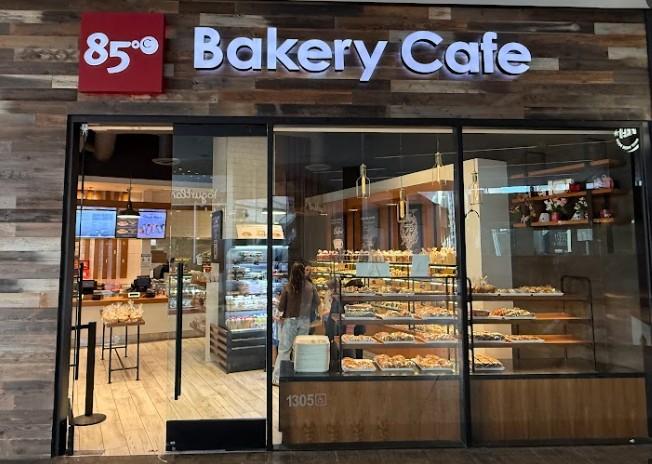
It was also during this time that 85°C Bakery Cafe emerged with its concept of "five-star cakes at affordable prices."
SARS: A Trial Following Taiwan's First Change of Ruling Party
Two years after Starbucks began operations, the Democratic Progressive Party's (DPP) Chen Shui-bian won the 2000 Taiwan presidential election, marking Taiwan's first change of government through a democratic election from the Kuomintang (KMT) to the DPP.
However, the SARS epidemic soon struck the Chen Shui-bian administration.
The SARS outbreak originated in Guangdong Province, China, in November 2002, and spread internationally via Hong Kong by February 2003.
Because Taiwan had frequent business travel and interaction with mainland China and Hong Kong, the infection was brought in through travelers.
On April 22, 2003, a nosocomial (hospital-acquired) infection cluster involving seven medical workers at Taipei Municipal Heping Hospital was reported to health authorities.
By the following day, cases were confirmed not only in the emergency outpatient department but across multiple floors of the hospital.
Authorities estimated they needed to trace about 930 staff members and approximately 10,000 patients and visitors who might have had contact with a diagnosed male patient before his diagnosis.
On April 24, Heping Hospital was completely locked down. Over 1,300 people, including medical staff, patients, and accompanying family members, were quarantined inside the hospital.
The goal was to prevent infected individuals from leaving, but because the lockdown was implemented without adequate preparation, major chaos ensued inside.
As of April 22, Taiwan had 29 cases and zero deaths.
However, following the cluster infection at Heping Hospital, the numbers surged to 264 cases and 34 deaths by mid-May, and to 680 cases and 81 deaths by June 1 based on the "probable case" criteria at the time.
During the SARS epidemic, the use of hotels, tourism, airlines, department stores, restaurants, and taxis plummeted.
People feared hospitals and public transportation, which also led to discrimination against quarantined individuals and chaos surrounding masks and disinfectants.
5-Star Hotels Selling Take-out Bento Boxes During the SARS Epidemic
During the 2003 SARS epidemic, people avoided enclosed spaces and crowded restaurants.
Public transportation usage in Taipei significantly dropped during the peak of the outbreak, confirming that people altered their daily behaviors to avoid infection risks.
As hotel banquets, accommodations, and restaurant usage declined, hotels utilized their kitchens and chefs to sell take-out bento boxes (lunch boxes).
Because customers could pick up their bento boxes near the entrance without staying in the hotel for an extended period, there was less psychological resistance compared to normal restaurant dining.
For consumers, even at the same price of 150 New Taiwan Dollars (NTD), the perception was different when buying from a hotel versus a regular bento shop.
Products from a 5-star hotel carried the following expectations:
- Prepared by chefs from a famous hotel
- Relatively high-quality ingredients
- Rigorous hygiene management
- A chance to try the taste of a hotel they normally couldn't afford
Especially during a pandemic, consumers had a strong psychological preference for brands they could trust for hygiene, not just price.
As SARS reduced the enjoyment of traveling, dining out, and banquets, hotel bento boxes became a small luxury to enjoy at home or work.
Customers could try dishes for about 150 NTD that would normally cost hundreds or thousands of NTD, including service charges, if eaten inside the hotel's restaurant.
Therefore, it was embraced as an "affordable luxury" that was easy to purchase even during economic or social downturns.
5-Star Hotel Take-out Bentos Inspired 85°C Bakery Cafe
The opening of 85°C Bakery Cafe was sparked by the SARS epidemic.
Founder Wu Cheng-hsueh took notice of 5-star hotels selling take-out bento boxes.
Seeing this, he thought, "This is the true appeal of a five-star hotel. Trust in quality can overcome even the anxiety of SARS and make people line up."
He also recalled a trip to Japan he took with his wife for a change of pace when his former delivery pizza chain, "Hot to Home," was struggling.
There, he discovered a culture where chefs and pastry chefs with hotel backgrounds opened small specialty shops, allowing general consumers to take home cakes and bread.
From these observations, he formulated a hypothesis: "If we offer five-star quality at mass-market prices in a take-out format, it will definitely sell."
Consequently, he visited Cheng Chi-lung, a dim sum head chef at a 5-star hotel, seven times to persuade him. Ultimately, he gathered four head chefs with 5-star hotel backgrounds to create a system capable of providing "top-tier yet affordable" cakes.
The brand name "85°C" originated from the discovery, after extensive research, that carefully selected Antigua coffee beans from Guatemala tasted best when brewed at exactly 85 degrees Celsius.
Furthermore, this naming stood out among ordinary store names like "... Coffee" or "... Cafe."
Presenting a specific temperature in detail gave the entire brand—beyond just a cup of coffee—an impression of a "scientific dedication to quality."
However, it was not positioned merely as a coffee specialty shop, but rather a place where cakes and bread were the main attractions, with coffee serving as an accompaniment.
The official name, "85°C Coffee, Cake & Bakery Specialty Store," corroborates this.
By its own definition, it relies on a three-pillar concept of "Coffee + Cake + Bakery."
Looking at actual average customer spending and the main drivers of customer traffic, the affordable yet high-quality cakes and breads in the showcases play a starring role, while coffee remains a complementary item.
Opening of the First 85°C Bakery Cafe
On July 28, 2004, the first store opened in Yonghe City, Taipei County (now Yonghe District, New Taipei City).
Yonghe is located just across the Tamsui River (Xindian River) from Taipei City's Zhongzheng and Da'an districts. Connected by multiple bridges, many residents commute to central Taipei for work or school.
Moreover, Yonghe is the most densely populated area in Taiwan (and was once considered one of the highest in the world), with people packed into a very small area.
For an affordable cafe aiming for take-out and high turnover, this offered ideal location conditions.
With a dense population of pedestrians passing through, the store could capture sales of bread, cakes, and coffee as part of people's daily routines.
It was a location that could tap into the massive population of the Taipei metropolitan area while avoiding the high rents of prime real estate in Taipei City.
From the very beginning, this store penetrated the market by clearly promoting its strategy: "A five-star banquet through a commoner's experience."
They entered the market armed with freshly brewed top-tier Arabica coffee, alongside breads and cakes developed by invited 5-star hotel head chefs.
According to multiple Taiwanese business magazines, this first store recorded sales exceeding 4 million NTD in its first month. At the time, this was an exceptional achievement for an unknown new bakery cafe.
The speed of its subsequent expansion speaks most eloquently of this initial success.
Just four months after opening the first store, on November 24 of the same year, they opened a second store on Gongyi Road in the West District of Taichung City, and simultaneously opened up nationwide franchise opportunities.
By 2006, the total number of stores in Taiwan reached 237, overtaking Starbucks to become Taiwan's largest coffee and cake chain.
It expanded at an astonishing pace, reaching 300 stores within three years of its opening.
At that time, 85°C displayed "35 NTD Coffee" and "Five-Star Chef's Cakes" on prominent signboards, making prices clearly visible from outside the store.
They also adopted a store design that faced transparent cake display cases toward the street, showing the products directly to passersby.
This was quite different from traditional cafes.
In high-end cafes of the time, it was often difficult to know the prices and products without entering the store. 85°C, however, kept its entrance open, displayed prices prominently, and instantly communicated that while it looked expensive, it was actually highly affordable.
Overseas Expansion of 85°C Bakery Cafe
Riding the momentum of building an overwhelming domestic position, the company ventured overseas.
The center of their overseas expansion was mainland China. In late 2007, they entered Shanghai, established a local subsidiary, and set up a central factory.
In 2008, they accelerated store openings targeting the Central China region, and planned expansions into South and North China.
In July 2009, they entered Shenzhen, opening the door to the southern market, and in September of the same year, they opened their first stores in Nanjing and Beijing.
Within a year and a half of opening their Shanghai flagship store, they reached 55 locations in mainland China alone.
They rapidly blanketed the Yangtze River Delta region with 39 stores in Shanghai, 5 in Suzhou, 6 in Hangzhou, 2 in Kunshan, and 1 in Wuxi.
Alongside China, they also expanded into the Americas, Europe, and Oceania.
Business Expansion in the United States
The first U.S. store opened in September 2008 in Irvine, California.
They set up shop in the Diamond Jamboree shopping mall in Irvine, part of the Greater Los Angeles area with a large ethnic Chinese population. During the opening period, they offered a limited-time promotion of coffee for $1 a cup, causing lines so long that the queue outside the store became a local "attraction." Later, they also opened their first Australian store in Sydney.
That same month in the U.S., the major investment bank Lehman Brothers collapsed, triggering the global financial crisis.
However, local news reports recorded that long lines formed outside the 85°C store right from its opening.
Ordinarily, this would seem like the worst possible timing, but 85°C's product lineup was relatively compatible with a recession.
Rather than an expensive cafe experience like Starbucks, it was an "affordable luxury" combining bread, cake, and coffee for just a few dollars.
Buying a few unusual pastries places a small burden on the household budget, serving as a cheap alternative to visiting high-end restaurants.
Additionally, the area around Irvine had a large Asian population, including people of Taiwanese and Chinese descent, making it an ideal location to initially acquire customers who sought Asian-style savory and sweet breads or who were already familiar with the Taiwanese brand.
From there, the store experience of "picking up a tray and continually selecting freshly baked bread" spread to non-Asian customers as well.
Although the first U.S. store was successful, 85°C did not rush to open stores nationwide during the financial crisis.
As of early 2013, they only had three U.S. stores, including the Irvine location, having spent their first five years cautiously validating their store model in Southern California.
After establishing their manufacturing and logistics systems, they accelerated store openings starting around 2015.
Internet Backlash Over President Tsai Ing-wen's Visit to a U.S. Store
In 2018, 85°C was embroiled in a political controversy in mainland China surrounding a visit by then-Taiwanese President Tsai Ing-wen to one of their U.S. stores. This incident is well known as a symbol of the sensitivity of cross-strait relations.
In August 2018, Tsai Ing-wen stopped in Los Angeles for a transit layover en route to visit diplomatic allies in Central and South America, such as Paraguay.
At the time, it was diplomatic practice for the Taiwanese President to "stop over" on U.S. soil under the format of a "transit."
When the Taiwanese President visits diplomatic allies in Central and South America, it is customary to transit through the U.S. on the way there and back. During this layover, she visited a local 85°C store; the store employees were overjoyed by the President's visit, asking her to sign a cushion and taking photos with her. This was how the incident began.
The direct trigger for the uproar was when an excited local employee posted the interactions with the President (autographs and commemorative photos) online.
Chinese netizens found this, interpreted it as "85°C presenting a 'large gift package' to Tsai Ing-wen," and spread it widely.
China upholds the "One China" principle and does not recognize the Taiwanese leader acting internationally as "President."
Therefore, simply being a store visited by the Taiwanese President was enough to make the company a target for labeling by Chinese online public opinion as a "store that welcomed Taiwan independence forces."
This was a hyper-sensitive reaction from Chinese public opinion that neither the store nor Tsai Ing-wen's side could have fully predicted.
Furthermore, although 85°C originated in Taiwan, it had a massive 589 stores in mainland China (as of 2018) and relied on the mainland market for a substantial portion of its sales.
For an ordinary local Taiwanese company, a visit from the Taiwanese President would merely be an "honor."
However, because 85°C was heavily invested in the massive mainland market, the fact that they "welcomed the Taiwanese President" directly translated into a severe business risk.
This "high dependence on the mainland" was the decisive factor that turned a standard PR moment into a massive crisis.
Consequently, 85°C was branded by Chinese netizens as a "pro-Taiwan independence enterprise," prompting calls for a boycott.
Immediately after the incident, the company took a severe hit.
Chinese netizens flooded 85°C's Weibo account with angry comments, called for boycotts, and had their products removed from food delivery platforms.
As a result, it was reported that the market capitalization of its parent company, Gourmet Master Co. Ltd. (stock code 2723), temporarily wiped out nearly 7 billion NTD.
Online, "85°C" was mocked with nicknames like "92°C," "87°FxxK," and "64°C," resulting in a disastrous situation where the brand was battered by both sides of the strait.
To extinguish the flames, 85°C issued a statement on its official website for mainland China stating that its stance of "firmly supporting the 1992 Consensus" remained unchanged. (The 1992 Consensus is the unofficial name for an alleged agreement reached between the governments of the PRC and the ROC [Taiwan] regarding the "One China" issue, where both agree to uphold "One China" but reserve their own interpretations. While its contents were kept secret for a time, Su Chi, head of the Mainland Affairs Council, first named and announced it shortly after Chen Shui-bian's presidential election victory. However, then-President Chen Shui-bian, former President Lee Teng-hui, and Straits Exchange Foundation Chairman Koo Chen-fu all pushed back, arguing that no such consensus existed). This statement, however, backfired by provoking a severe backlash from Taiwanese netizens, trapping the company in the middle.
Another point of contention was whether Tsai Ing-wen had "gone out of her way to stop by for coffee" or "just happened to pass by."
While her entourage explained they passed the store on the way back to their hotel, the Presidential Office spokesperson stated it was "not an impromptu idea," revealing discrepancies in their explanations.
Although the short-term boycott itself subsided relatively quickly, in the long run, this incident became a turning point symbolizing 85°C's retreat from the Chinese market.
# Shift from Dependence on China to a Focus on the U.S.
This incident brought the risks of 85°C's deep dependence on the Chinese market into the light of day, becoming a symbolic event for the company's subsequent strategic shift.
Looking at the high level of dependence forming the backdrop, at the time of the incident (around 2018), the Chinese market accounted for over 60% of the company's sales (reaching as high as 71% in 2015).
They were truly in a state where "China held the power of life and death over them."
In recent years, that Chinese market has shrunk dramatically.
Looking at the latest situation, in 2025, they massively closed unprofitable stores in China, recording over 1 billion NTD in one-time losses in the third quarter alone, and falling into a single-period deficit of 6.06 NTD per share.
They closed over 180 stores in half a year, and it is reported that by the end of 2025, the number of stores in China is expected to shrink significantly from its peak to around 260.
As of December 2025, sales in the Chinese market had plummeted by nearly 40% compared to the previous year, and China's share of the entire group dropped from its former 60–70% down to 30%.
On the other hand, the U.S. market has emerged as a new pillar of growth.
Currently, the U.S. has become their largest market, accounting for 52% of group sales, with Taiwan at 18% and China at 30%.
The U.S. market has continued double-digit growth for five consecutive years, with revenue more than doubling. Between 2024 and 2025, they expanded into six new markets, including New York, New Jersey, and Illinois, carrying the momentum to aim for 100 U.S. stores.
Comments