
After the end of the Cultural Revolution, China shifted its policy to reform and opening up, actively attracting foreign companies. Coffee was served in hotels and restaurants catering to foreign dignitaries, tourists, and businesspeople, becoming a valuable means of earning foreign currency.
■ The End of the Cultural Revolution
In September 1976, Mao Zedong, the supreme leader of China who spearheaded the Cultural Revolution, died.
Hua Guofeng was designated by Mao Zedong as his successor.
Then, the Gang of Four (Jiang Qing, Zhang Chunqiao, Yao Wenyuan, and Wang Hongwen), who had led the Cultural Revolution, were arrested and purged the following October.
Later, in the summer of 1977, Deng Xiaoping returned as Vice Premier.
Deng Xiaoping had previously worked to revitalize China's economy just before the Cultural Revolution, but had fallen from power after clashing with the proponents of the Cultural Revolution.
In contrast to Hua Guofeng, Mao Zedong's legitimate successor, Deng Xiaoping advocated the "Four Modernizations" of agriculture, industry, national defense, and science and technology, gaining support within the party and military.
Then, in December 1978, he became the head of the highest political council of China. At the Third Plenary Session of the 11th Central Committee (the 11th Plenum), the party's focus shifted from Cultural Revolution-style political struggle to economic construction and modernization, and Deng Xiaoping became the de facto supreme leader.
Deng Xiaoping promoted the reform and opening-up policy.
■ US-China Summit in 1978
In January 1978, although his official title was neither head of state nor party chairman, he met with US President Carter as the de facto supreme leader.
January 1, 1979, was also the month that the normalization of US-China relations came into effect.
At that time, China was in conflict with the Soviet Union, and Deng Xiaoping proposed at this meeting that the United States, Japan, Europe, and China unite to counter Soviet expansionism. This was the call to action.
Although the United States was also in conflict with the Soviet Union, it prioritized easing tensions with the Soviet Union, so it was cautious about this proposal. However, strategically, they agreed to cooperate with China.
With their interests aligned, the US and China signed cooperation agreements in the fields of space, energy, and agriculture, secured an agreement to send Chinese students to American universities, and showed a welcoming attitude towards American companies entering the Chinese market, thus solidifying the foundation of the reform and opening-up policy.
Following this, China saw a dramatic shift from the period of the Cultural Revolution, with increased exchanges with capitalist countries.
■1978: The start of Coca-Cola sales in China
The US and China Prior to the summit, there was a symbolic event related to the reform and opening-up policy.
On December 13, 1978, The Coca-Cola Company signed a sales agreement in China with COFCO (China National Cereals, Oils and Foods Import & Export Corporation).
Then, on December 15, the normalization of diplomatic relations between the US and China was announced.
President Carter instructed that the press conference regarding the Coca-Cola sales agreement in China be held after the announcement of the normalization of diplomatic relations.
Therefore, the press conference was held on December 19.
Since the 11th Plenary Session of the Central Committee of the Communist Party of China, in which Deng Xiaoping became the supreme leader, began on December 18, the press conference regarding this agreement was announced during that period.
US-China politics Both the political negotiations and the business negotiations for Coca-Cola took place simultaneously at the Beijing Hotel. It was during this time that the Supreme Council of Chinese Politics convened, and the shocking decision to open up the country was made.
Coca-Cola had been sold in China before World War II, but its sale was banned after the establishment of the Communist regime in 1949.
And this was a situation that had continued until very recently, as if the Cultural Revolution had just taken place.
■Coca-Cola's role in earning foreign currency during the reform and opening-up period
And in January 1979, 3,000 cases of Coca-Cola, a symbol of reform and opening up, were transported from Hong Kong (then a British territory) to Beijing and Guangzhou.
Initially, the cola... It was only available at hotels and other establishments frequented by foreign tourists; it wasn't available to the general Chinese public.
By accepting foreign currency (or foreign currency exchange certificates) as payment for Coca-Cola, the Chinese government was able to acquire valuable foreign currency.
At the time, China was suffering from a serious shortage of foreign currency, so to alleviate this, they sold Coca-Cola to foreigners visiting China.
■Coffee was also a means of acquiring foreign currency
At that time, in addition to the renminbi, China had a special currency called "foreign currency exchange certificates" for use by foreigners.
Coffee, Coca-Cola, and imported cigarettes were mainly sold at "friendly shops" and "lounges of luxury hotels" where these foreign currency exchange certificates could be used. It was unavailable.
This allowed the government to reliably manage and recover foreign currency brought in by foreigners, and to operate it separately from the general domestic market (the RMB economy).
With the aim of acquiring foreign currency and attracting foreign investment companies, China proceeded to build a series of hotels for foreigners.
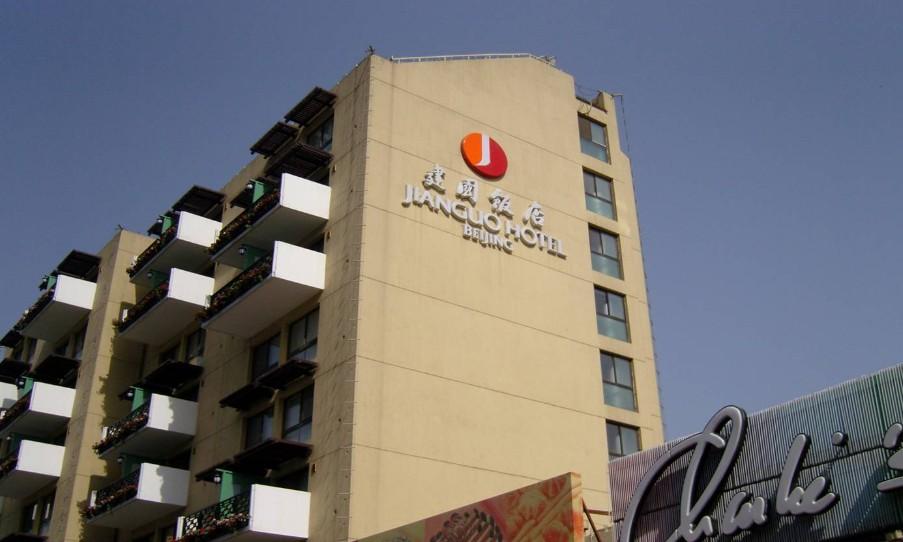
The Jianguo Hotel, which opened in Beijing in 1982 as a joint venture between the Beijing Municipal Tourism Bureau and a Hong Kong businessman (Chen Xuanyuan), is a representative example.
It is known as China's first Sino-foreign joint venture hotel.
The Jianguo Hotel was not merely an accommodation facility, but an "experiment" in introducing foreign capital, foreign-style management, and Western-style services to China as part of the reform and opening-up policy. Because it was a "place" (a place for Western-style hotel development).
According to an article from Beijing, this was the first modern hotel in Beijing to involve a joint venture with foreigners, foreign design, and foreign management participation, and at the time of its opening, it was perceived as "China's first full-fledged Western-style hotel."
Western-style management methods were introduced to employee recruitment and training, front desk operations, and restaurant management.
In 1984, the Chinese government issued a nationwide directive to "learn from the management experience of the Jianguo Hotel." This accelerated the modernization of the hotel industry throughout China and established service industry standards.
There was a time when security guards stood at the entrance, making it difficult for ordinary Chinese people to even enter freely.
The price of a single cup of coffee was equivalent to several days' to a week's worth of a worker's monthly wage at the time, making it a distant concept both physically and psychologically.
The Jianguo Hotel, which opened in 1982, was China's first Sino-foreign joint venture hotel, and even in recollections of the time, the very existence of a "real bar, coffee shop, and French restaurant" within the building was considered revolutionary.
These coffee beans and ingredients were procured through a network of foreign exchange, trading companies, and agencies that used Hong Kong as a transit point.
Comments