
Following the food crisis of the "Arduous March", Jangmadang (local markets) sprang up across North Korea, the communist rationing system collapsed, and a market economy emerged.
However, even after the authorities declared the end of the Arduous March, international aid continued.
Among these aid organizations, the Swiss relief agency ADRA opened North Korea's pioneering cafe in 2005.
Subsequently, during the era of Kim Jong Un, who succeeded Kim Jong Il, cafes opened one after another in Pyongyang.
Spending time at a cafe became a new lifestyle in itself for university students and young couples.
Whereas dining establishments in North Korea previously had a strong character of simply being "places to eat a meal," cafes have given rise to a modern form of leisure consumption: chatting over a single cup of coffee.
Pyolmuri Cafe (별무리 카페)
Pyolmuri Cafe is a cafe established primarily by a Swiss aid organization.
At the time in North Korea, the Swiss government and Swiss NGOs were engaged not only in humanitarian aid, but also in providing agricultural technical guidance, food processing, and economic development assistance.
What is particularly interesting is that Pyolmuri Cafe was not merely a commercial eatery, but was tied to a humanitarian aid project aimed at delivering bread to North Korean children.
ADRA stands for the Adventist Development and Relief Agency, an international humanitarian aid organization originating from the Seventh-day Adventist Church.
Although its headquarters is located in the United States, its Swiss branch was deeply involved in the North Korean project.
The international NGO ADRA opened the cafe with the support of the North Korean government, backed by financial cooperation from the Swiss retail company Migros and ADRA's Swiss branch.
The purpose of opening the cafe was to generate profits and use the proceeds to sustain food aid for children.
According to a 2005 announcement by ADRA, the affiliated bakery factory produced approximately 5 tons of bread and fortified biscuits every day.
Furthermore, an August 2005 report by South Korea's MBC noted that while the cafe was originally opened for foreigners, North Korean residents looking to try Western dishes such as pizza were also visiting.
Just a few months after Pyolmuri Cafe opened, the North Korean government demanded that international NGOs terminate their aid projects and withdraw their foreign staff.
The official explanation from the North Korean government was that it was transitioning from emergency food aid to long-term development cooperation.
In reality, however, NGOs engaged in development cooperation were also asked to withdraw.
Subsequently, management was completely handed over to the North Korean side (state-run), and after modern cafes proliferated during the Kim Jong Un era, it took on the status of a "slightly retro, long-established cafe," continuing to operate for a long time.
Background Behind the Demand for NGO Withdrawal
In reality, North Korea at the time had not managed to solve its food crisis on its own.
The true reasons Kim Jong Il sought to expel Western NGOs lay in "tightening control over the regime (vigilance against espionage and the influx of information)" and "reliance on 'unmonitored aid' from China and South Korea".
(1) Aversion to "domestic monitoring" by foreign staff
To prevent relief supplies from being diverted to the military or the privileged class, international NGOs and the UN World Food Programme (WFP) required strict monitoring (on-site inspections in local regions) to verify "where and to whom" supplies were distributed.
The Kim Jong Il regime was highly wary of foreign staff traveling through provincial cities and rural villages in North Korea, making direct contact with residents, and witnessing the country's dire conditions, viewing it as "de facto espionage (a dangerous element that could destabilize the regime)".
(2) Strengthening control through market (Jangmadang) regulations and the "revival of the rationing system"
Following the economic reforms of 2002, markets (Jangmadang) expanded within North Korea, strengthening a trend in which citizens relied on their own businesses to survive rather than depending on the state.
Feeling a sense of crisis, the Kim Jong Il regime attempted to force through a "ban on grain trading in markets" and a "full revival of the state food rationing system" starting in October 2005.
(3) Availability of "massive, unconditional aid" from China and South Korea
At the time, South Korea was pursuing the "Sunshine Policy (engagement policy)" under the Roh Moo-hyun administration, and China was also expanding its economic cooperation.
Whereas Western NGOs and the UN made persistent demands regarding "human rights issues" and "strict distribution verification (monitoring)," South Korea and China provided hundreds of thousands of tons of food and fertilizer annually directly to the North Korean government without attaching strict monitoring conditions.
Kim Jong Il calculated that "even if we expel the meddlesome Western NGOs, we can get by well enough with aid from China and South Korea".
(4) Backlash against "human rights criticism" from the United States
Pressure from the international community was mounting, with the enactment of the "North Korean Human Rights Act" in the United States in 2004 and the adoption of a resolution condemning North Korea's human rights violations at the UN in 2005.
In response, North Korea pushed back, claiming that "they are using humanitarian aid as a pretext to collapse our regime from within," and moved to shut out the NGOs.
Kim Jong Il's Successor, Kim Jong Un
In the summer of 2008, Kim Jong Il reportedly suffered a stroke, and concerns over his health accelerated the creation of a succession system; rather than his eldest son Kim Jong Nam (who had lived abroad for a long time and reportedly fell out of favor due to incidents such as being detained while attempting to enter Japan on a forged passport in 2001) or his second son Kim Jong Chol (who was seen as unsuited for politics), his third son Kim Jong Un is believed to have been chosen.
In early 2009, reports emerged that he had been informally designated as the successor and that party and military officials had been notified.
Around this time, preparations for a cult of personality reportedly began internally, using titles such as "Young General".
At the Conference of the Workers' Party of Korea in September 2010, he was awarded the title of four-star General of the Korean People's Army and appointed Vice Chairman of the Central Military Commission of the Party.
This was the first moment his name and photo appeared in public, and from then on, he frequently appeared alongside his father during on-the-spot guidance tours of military units and factories.
As his guardians, his aunt Kim Kyong Hui and her husband Jang Song Thaek are believed to have played crucial roles.
When Kim Jong Il passed away on December 17, 2011, Kim Jong Un was immediately positioned as the "Great Successor" and assumed the post of Supreme Commander of the Korean People's Army at the end of that month.
In April of the following year, 2012, he became First Secretary of the Party and First Chairman of the National Defense Commission, acquiring all the top posts across the party, military, and state.
Still in his late twenties at the time, he had a remarkably short preparation period of just over a year since becoming publicly known as the successor.
The Purge of Jang Song Thaek
In December 2013, in an unusual move, footage was released showing Jang Song Thaek being dragged out of a party meeting by military officers; he was arrested on charges including "plotting to overthrow the state," "corruption," and "treasonous acts," sentenced to death by a special military tribunal just days later, and executed the same day.
While in a position to assist Kim Jong Un, Jang Song Thaek possessed his own independent network across the party, security agencies, and economic sectors.
Jang Song Thaek was a powerful figure from the Kim Jong Il administration and had far longer political experience than Kim Jong Un.
When Kim Jong Il died in 2011, Kim Jong Un was still in his twenties.
Therefore, Jang Song Thaek was valued as a guardian supporting the new Supreme Leader.
However, as Kim Jong Un consolidated his power, Jang Song Thaek's influence may have come to be viewed as a potential threat to his sole leadership system.
The Center for Strategic and International Studies (CSIS) in the United States has also pointed out the possibility that Jang Song Thaek and his network were perceived as a threat to Kim Jong Un's monolithic leadership system.
Jang Song Thaek was also a key figure in promoting economic cooperation with China.
In particular, he was involved in the development of North Korea's Rason Special Economic Zone as well as Hwanggumpyong and Wihwa Islands, negotiating directly with the Chinese side.
The North Korean authorities condemned Jang Song Thaek for acts such as leasing land in the Rason Special Economic Zone to a foreign country for a long period, labeling it a betrayal of the state.
At the time, Jang Song Thaek was attempting to strip the military of its monopoly over the lucrative rights to export coal and seafood to China and transfer them to the jurisdiction of the party and the cabinet.
A prevailing theory suggests that the direct trigger was an armed clash over the reclamation of these concessions, after the military and other close aides (such as Choe Ryong Hae and the Ministry of State Security) pushed back and lobbied Kim Jong Un.
For Kim Jong Un, who rose to the top at a young age, an uncle and "guardian" who possessed overwhelming connections and financial power—and who could at times even interfere with his instructions—had become the greatest obstacle to building a complete dictatorship.
Jang Song Thaek had extremely close ties with the Chinese leadership.
It is also believed there was paranoia that if China were ever dissatisfied with the Kim Jong Un regime, they might install Jang Song Thaek (or Kim Jong Nam, whom he was reportedly protecting) as an "alternative leader".
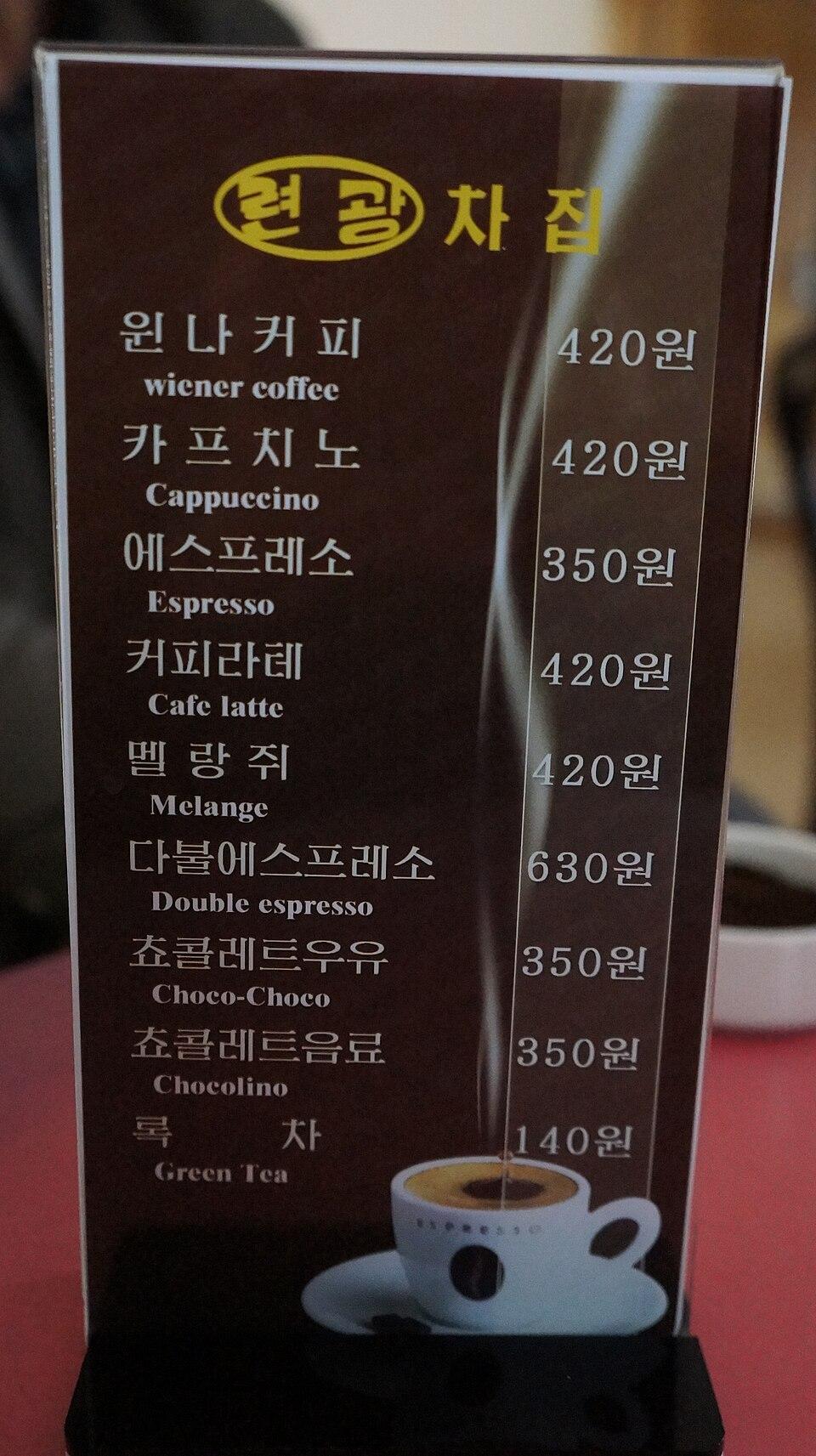
Ryongwang Coffee Shop
In October 2011, the Ryongwang Coffee Shop opened in the Korean Central History Museum in central Pyongyang.
It is an Austrian-style specialty coffee shop.
It is an authentic Viennese-style cafe in which European entrepreneurs were directly involved, teaching North Korean employees coffee brewing and baking techniques.
The person who conceived this shop was Helmut Brammen, a businessman from Vienna.
Around 2009, Brammen approached Helmut Sachers, who ran a coffee roasting company, with the idea of expanding into North Korea.
Negotiations with the North Korean side took about two years.
Subsequently, the roaster Sachers and Brammen brought an Austrian baker to Pyongyang in March to train the staff.
The shop opened in October 2011, just before Kim Jong Il's death (in December of the same year), placing it right at the threshold of the beginning of the Kim Jong Un era.
Atmosphere of the Coffee Shop
Its greatest feature is the juxtaposition of having a Viennese-style cafe located at the heart of the state—Kim Il Sung Square, the stage for military parades and mass events.
Contemporary German newspapers reported that after learning about Korean revolutionary history inside the museum, visitors pass through a door modestly marked only with the word "Cafe" in Korean, where they are served Viennese-style coffee topped with whipped cream.
As for the interior of the cafe itself, it is described as a single room with a high ceiling resembling a train station waiting room, where videos of Viennese waltzes are usually playing on the television.
It is also written that upon passing through the door, one sees a yellow coffee-pot-shaped logo reading "Helmut Sachers Kaffee," indicating that the interior was arranged in a relatively "Viennese style."
The name "Ryongwang (련광)" may be derived from the historic pavilion "Ryongwang Pavilion (Ryongwangjong)" located on the banks of the Taedong River in Pyongyang.
The menu centers on coffee, hot chocolate, and pastries baked in-house, priced at around 2 to 6 dollars; because these are not prices that ordinary people walking through the square can casually afford, customers are reportedly often sparse.
Media reports at the time of its opening also depicted the stark contrast between such high-end shops, which were limited to foreigners and the wealthy, and the square outside, where children showing signs of malnutrition and young soldiers were training.
Why—and How—Was It Able to Open in North Korea?
For a foreigner to open a cafe in North Korea at that time required permission and business cooperation from the North Korean side.
Moreover, the location was the Korean Central History Museum, facing Kim Il Sung Square in the center of Pyongyang.
Behind Brammen's ability to establish a business at the very core of the North Korean regime (a prime location right next to Kim Il Sung Square) lies the unique historical relationship between Austria and North Korea.
Like Switzerland, Austria is a permanently neutral country, and since the Cold War era, its capital, Vienna, had been North Korea's largest hub in Europe for diplomacy, finance, and trade (as well as the procurement of luxury goods for the leadership).
In the past, the North Korean-affiliated "Golden Star Bank" (Kumbyol Bank) operated in Vienna, and under the management of Office 39 of the Workers' Party of Korea, it was reportedly involved in slush funds and underground economic activities such as illicit foreign currency earning, money laundering, and arms dealing.
This bank was accused by Austrian authorities of involvement in illicit activities in 2003 and was closed down around 2004.
Evaluation of Ryongwang Coffee
Ryongwang not only imported coffee beans and equipment, but also taught brewing techniques to North Korean employees.
A beverage that some people had previously known only as instant coffee was now brewed by baristas using an espresso machine and enjoyed by customers inside the shop.
This new format became a precedent that led to the cafe culture of the Kim Jong Un era.
Kim Jong Un's Exposure to Western European Cafe Culture in His Youth
Unusually for a Supreme Leader of North Korea, he is someone who experienced daily life in Western Europe during his youth.
Kim Jong Un reportedly stayed in Bern under a false identity as the child of a North Korean embassy official, using pseudonyms such as "Pak Un".
He initially attended the private International School of Berne, where classes were conducted in English, for a short period, and later transferred to a public school in Liebefeld, near Bern. At the public school, he reportedly progressed from a class for foreign students learning German to a regular class.
In stark contrast, during the late 1990s when Kim Jong Un was living in Switzerland, a severe food crisis caused by the "Arduous March" continued inside North Korea.
This means Kim Jong Un was exposed to the affluent consumer life of Western Europe in an environment completely different from that of ordinary citizens.
Switzerland is a country with a well-developed cafe culture.
During his youth, Kim Jong Un lived in an environment where European coffeehouses and restaurants were an integral part of daily life.
According to his aunt Ko Yong Suk (who later defected to the United States), who lived with Kim Jong Un in Switzerland as a surrogate mother, he frequently traveled with his aunt, her husband, and family to Paris (the Eiffel Tower and Euro Disney), Italy, and tourist spots and ski resorts within Switzerland.
She stated that "like an ordinary family, we enjoyed dining at restaurants and cafes at our travel destinations," meaning he was routinely familiar with the scenery of open-air cafes and bakeries on European street corners.
Then, after inheriting power at the end of 2011, the development of cafes, restaurants, and entertainment facilities progressed in Pyongyang.
It is possible that Kim Jong Un's own life in Switzerland influenced the development of cafe culture in Pyongyang.
コメント