
Around 1998, the North Korean authorities began replacing the slogan "Arduous March" with new ones such as "Forced March" and "Building a Strong and Prosperous Nation," and they are said to have declared the end of the Arduous March around 2000.
As the jangmadang markets expanded, food began to circulate through channels other than the state rationing system.
South and North Korea drew closer and began to cooperate economically.
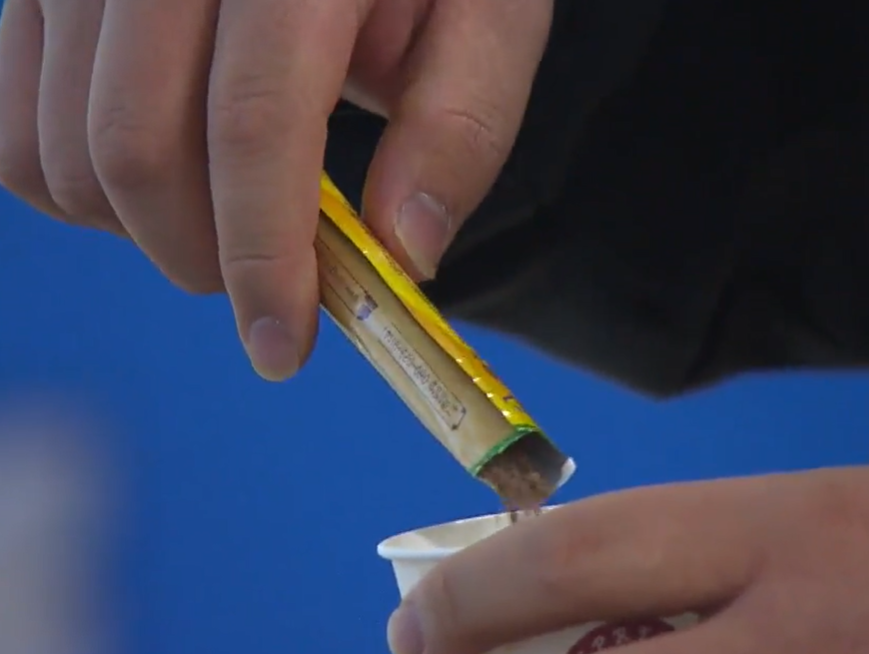
Against this backdrop, South Korean instant coffee sold in the jangmadang began to be consumed in North Korea as well.
The spread of coffee culture in North Korea was driven not only by government economic policy but also by workers at the Kaesong Industrial Complex and by jangmadang merchants.
In other words, even when inter-Korean political relations deteriorated, demand did not disappear among North Korean consumers who had once discovered how good South Korean coffee tasted.
International Food Aid
Following the great floods of 1995, North Korea made the unusual move of requesting assistance from the international community.
Led by the World Food Programme (WFP), large quantities of food were sent from the United States, China, Japan, South Korea, and other countries.
Inter-Korean aid expanded in particular after South Korea's Kim Dae-jung administration, inaugurated in 1998, launched its "Sunshine Policy." Although there were problems with the transparency of distribution, the aid nonetheless played an important role in improving the nutrition of vulnerable groups such as children and pregnant women and in mitigating large-scale famine.
According to FAO and WFP reports, international food aid in 1997–1998 was equivalent to roughly 76% of the estimated grain shortfall.
The Expansion of the Jangmadang
With the expansion of the markets, food began to circulate through channels other than the rationing system.
Researchers Stephan Haggard and Marcus Noland have concluded that by the late 1990s and early 2000s, ordinary households were obtaining most of their food from markets.
The authorities initially cracked down on this but ultimately had no choice but to tolerate it. The "July 1 Economic Management Improvement Measures" of 2002 partially gave official sanction to market activity. A system in which people obtained food from markets rather than relying on the state helped sustain recovery from the famine.
A Partial Recovery in Agricultural Production and a Decline in Population
Once the period of repeated natural disasters had passed, harvests recovered somewhat.
And, sadly, the large number of deaths (estimates vary widely, with many putting the toll somewhere between several hundred thousand and one million) along with defections reduced the very number of people who needed food, which in turn eased the imbalance between supply and demand.
Inter-Korean Economic Cooperation in the 2000s
Shortly after South Korea requested emergency assistance from the IMF (International Monetary Fund) during the 1997 Asian financial crisis, Kim Dae-jung was elected president of South Korea.
While pursuing South Korea's economic reconstruction, Kim Dae-jung also worked to improve relations with North Korea.
He launched the Sunshine Policy in 1998 and, in 2000, realized a historic inter-Korean summit with Kim Jong-il.
Even though South Koreans at the time were aware of past incidents such as the Korean Air bombing and the terrorist attacks and abductions carried out by North Korean agents, a very large number of them wanted improved relations with the North as of 2000.
A view that distinguished between the North Korean "regime" and its "people" grew stronger.
Reports during the 1990s famine that North Koreans were starving to death stirred sympathy among South Koreans, who felt that "our own people are going hungry," and the Sunshine Policy won broad support from the South Korean public.
The Euphoria Immediately After the Summit
The inter-Korean summit of June 2000 had a profound impact on the South Korean public and moved many deeply.
Footage of the leaders of the two Koreas embracing for the first time since the division was broadcast on television again and again, and in opinion polls an overwhelming majority rated the summit positively.
In August, reciprocal visits by separated families took place, and at the Sydney Olympics that September, the two Koreas marched together at the opening ceremony. A mood spread through society as if unification were drawing near.
The Start of Operations at the Kaesong Industrial Complex
Particularly from 2000 to 2007, South Korean companies built factories in North Korea, South Korean tourists visited the North, and work progressed on railways and roads linking the two Koreas.
The Kim Jong-il regime, while treating South Korea as an adversary politically and militarily, cooperated with it economically and accepted foreign currency and investment.
The Kaesong Industrial Complex began operations in 2004.
South Korean companies built factories there, employed North Korean workers, and manufactured clothing, shoes, electronic components, and other goods.
Inter-Korean trade, which stood at about $724 million in 2003, grew to about $1.82 billion by 2008, roughly a 2.5-fold increase.
The Development of the Jangmadang
In the 2000s, North Korea's jangmadang (장마당) had an atmosphere similar to the street-stall markets and shopping streets of old Japan. They sold everything from food to Chinese-made home appliances, clothing, cosmetics, and even South Korean instant coffee.
Moreover, unlike during the Arduous March of the 1990s, when they were black markets for simply securing food, by the 2000s people had emerged who made a profit through trade, and a distinctly North Korean market economy developed.
When the North Korean government institutionalized permanent general markets in 2003, roofed sales areas and markets with organized stall sections also developed.
Markets such as Tongil Street Market in Pyongyang handled goods including Chinese-made televisions, watches, clothing, and food.
The Environment in Which the Jangmadang Generation Grew Up
The "Jangmadang Generation" refers to the young generation of North Koreans born roughly between the late 1980s and the 2000s, who grew up during or after the Arduous March.
The name comes from the markets (jangmadang) that were at the center of their lives.
A defining characteristic of this generation is that they have little memory of a time when the state rationing system functioned properly.
Their parents experienced a socialist system in which "the state feeds you," but the Jangmadang Generation grew up watching their families make a living by trading in the markets for as long as they can remember.
They naturally came to feel that survival depends not on the state but on one's own wits and money.
As a result, it is often noted that, compared with older generations, they have relatively weaker loyalty to the state and its leaders, and tend to be more pragmatic and individualistic, placing greater value on money and material comfort. Because open defiance of the regime is dangerous, they avoid it; instead, they keep their public face separate from their private views, going through ideological education as a formality while putting their own lives first.
The Influence of the Korean Wave
Through USB drives, SD cards, and portable media players (notel) smuggled in from China, they grew up routinely consuming South Korean dramas, films, and K-pop, as well as Chinese content.
Because they know about the prosperity and freedom of life in the outside world, they rarely take state propaganda at face value.
Influenced by South Korean dramas, a culture spread that favored skinny jeans, Korean Wave–style hairstyles, and South Korean youth slang (such as calling a boyfriend "oppa").
The Spread of South Korean Instant Coffee in the Jangmadang
According to a 2009 report by the U.S.-based Radio Free Asia (RFA), because China restricted imports of coffee from South Korea, coffee was shipped by passenger ferry from the South Korean port of Incheon to Dandong, China, thereby circumventing the quota system.
From there, it was smuggled into North Korea across the Sino-Korean Friendship Bridge, which connects Dandong and Sinuiju.
To get it through customs, traders reportedly removed the original packaging, repacked the sticks into different containers, and bribed North Korean customs officials to look the other way.
In this way, sticks mainly of South Korea's Maxim brand were sold discreetly in the markets of major cities.
Inflows from the Kaesong Industrial Complex
Another route was the Kaesong Industrial Complex.
While it was in operation, South Korean companies provided North Korean workers with individually wrapped coffee sticks. These were extremely popular and are said to have often been taken out of the break rooms together with South Korean snacks such as Choco Pies, ending up in local markets.
Choco Pies are the famous example, but coffee mix circulated in much the same way.
Coffee as a Drink for the Privileged Elite
However, coffee was an expensive luxury for ordinary people.
A 2009 report stated that while many people were suffering from hunger, the privileged elite were enjoying South Korean instant coffee, and one defector said that most North Koreans had never drunk coffee and knew little about it.
A 2024 report likewise stated that coffee is expensive for ordinary people and is consumed mainly by the wealthy, while ordinary people are gradually learning about coffee culture through smuggled foreign films.
There is also testimony that coffee is used as a bribe, and that although domestically produced ginseng coffee exists, officials prefer Brazilian or South Korean coffee.
North Korea's Nuclear Tests
South Korea's economic cooperation with the North faced criticism from the outset.
It later came to light that, in arranging the summit, several hundred million dollars had been secretly sent to North Korea through the Hyundai Group, which became a major scandal known as the "cash-for-summit affair."
There have also been persistent suspicions that the funds and goods provided as aid were diverted to nuclear and missile development.
Indeed, North Korea conducted its first nuclear test in 2006, while cooperation was still underway.
UN Sanctions over Nuclear Weapons Development
In July 2006, after North Korea launched ballistic missiles including the Taepodong-2, the UN Security Council adopted Resolution 1695, calling on member states to prevent the transfer of missile-related materials.
Then, when North Korea conducted its first nuclear test on October 9 of the same year, Resolution 1718 was adopted five days later.
This was the first legally binding sanctions regime against North Korea under Chapter VII of the UN Charter. It banned trade in nuclear- and missile-related materials and major weapons, prohibited the export of luxury goods to North Korea, and froze the assets of individuals involved, among other measures.
Thereafter, sanctions were tightened with each nuclear test or missile launch.
Following Resolution 1874 after the second nuclear test in 2009 and Resolution 2094 after the third in 2013, the sanctions expanded in 2016–2017 to measures that dealt a blow to the North Korean economy as a whole, including bans on major exports such as coal, iron ore, seafood, and textiles, a ban on dispatching North Korean workers abroad, and a cap on supplies of refined petroleum products.
The Retreat of Economic Cooperation After 2008
The Lee Myung-bak administration, inaugurated in 2008, shifted to a policy of making economic cooperation conditional on progress on the nuclear issue.
In July of that year, a South Korean tourist was shot dead by a North Korean soldier at Mount Kumgang, and tourism there was suspended.
After the sinking of the South Korean naval vessel Cheonan in 2010, the South Korean government announced the "May 24 Measures," which halted almost all inter-Korean exchanges except for the Kaesong Industrial Complex.
The Kaesong Industrial Complex, the last to remain, was closed in 2016 in response to North Korea's nuclear tests and missile launches, and the framework of economic cooperation from the 2000s all but disappeared.
Opinion in South Korea remains sharply divided to this day over whether the Sunshine Policy led North Korean society toward openness or merely prolonged the life of the regime.
South Korean Instant Coffee Remained Popular Even After Inter-Korean Relations Soured
Even as inter-Korean relations deteriorated, South Korean coffee did not lose its popularity, and supply continued through channels such as smuggling via China.
Reports indicate that South Korean coffee mix continued to be traded in the jangmadang even after the Kaesong Industrial Complex closed in 2016.
At the time, South Korean coffee such as Maxim was being brought into North Korea via Dandong, China, and then through Sinuiju.
Cases have also been reported of traders changing the packaging or bribing customs officials to conceal that the products were South Korean.
In 2019 as well, a method was reported in which South Korean products were passed through customs by claiming they had been manufactured at factories run by ethnic Koreans in China.
コメント