
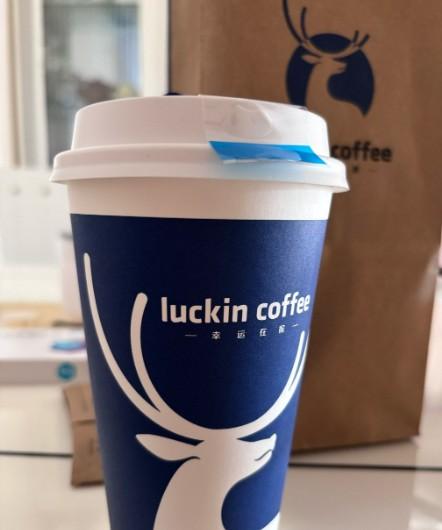
In February 2017, Chinese Foreign Minister Wang Yi remarked that the coffee produced by Hougu Coffee, a rapidly growing domestic brand, was the most delicious in the world. In that same year, Luckin Coffee, a domestic cafe chain destined to become a major rival to Starbucks, was founded by Lu Zhengyao and Qian Zhiya. These two were executives at CAR Inc. (Shenzhou Zuche), a major car rental chain that had experienced rapid growth since 2010.
The Car Rental Industry
CAR Inc. was founded in 2007. First, it is essential to understand its business structure. The company's model involved purchasing vehicles directly from automakers, renting them out through self-operated stores, covering all insurance and maintenance costs during their operation, and eventually selling them as used cars upon retirement. Essentially, it was an "asset-heavy" business model that required owning massive fleets of vehicles. Immediately after its founding, the global recession triggered by the Lehman Brothers shock caused China's exports to plummet. This led to factory closures, rising unemployment, and a sharp drop in rental car demand, plunging the company into a management crisis.
However, in 2010, Legend Holdings—the holding company of the world-class PC manufacturer Lenovo Group—stepped in with a massive investment. In September 2010, Legend Holdings injected 1.2 billion RMB into CAR Inc., providing a powerful driving force for its rapid expansion. Following this, Legend invested an additional 200 million RMB across two installments in 2011. This capital injection enabled dramatic growth: CAR Inc.'s fleet expanded from just 692 vehicles in 2009 to over 25,000 by the end of 2011, and exceeded 52,000 by June 2014. According to its prospectus, both the fleet size and total assets grew 75-fold between 2010 and 2014.
For a long time, the traditional car rental industry had been unpopular with the public due to cumbersome procedures, opaque information, and unreasonable pricing. Smartphones and the internet solved these problems. The advent of "internet car rentals" placed the industry on a trajectory toward standardization, smart technology, and specialization.
Furthermore, the widespread adoption of smartphones birthed entirely new rental formats. Driven by the rapid development of the internet, online rental models gradually gained prominence. In the short-term self-drive and car-sharing markets, the shift toward mobile and self-service formats became increasingly evident.
A new technology-driven retail model made possible by the widespread adoption of smartphones.
The rapid growth of this major car rental chain was fundamentally backed by the widespread adoption of smartphones in China. In 2008, Apple's iPhone 3G debuted. The smartphone ecosystem, which was years ahead of its time, rode the wave of 3G technology to open the curtain on the mobile internet and smartphone era. The same year also saw the release of the HTC G1, the world's first Android smartphone.
In China, 3G officially launched slightly later, in 2009. On January 7, 2009, the Ministry of Industry and Information Technology (MIIT) officially issued 3G licenses, marking the full-scale arrival of China's 3G era. The most notable change in the mobile phone industry during this time was the entry of Apple and Android, which fundamentally transformed the preceding 2G landscape.
Around 2010, smartphones gradually spread across China, bringing a variety of mobile phone brands to the market. Alongside Apple and HTC, Chinese consumers gained increasingly more options, including Huawei, Lenovo, and Xiaomi. This period coincided with the rise of domestic Chinese manufacturers. A particularly symbolic example is Xiaomi. Building on its "Mi Talk" (Miliao) community, Xiaomi utilized viral internet marketing and leveraged its high cost-performance to instantly establish brand awareness. It became known as "the first smartphone for young people."
Smartphones transitioned from a device for a niche group to "national infrastructure" with the arrival of the 4G era. On December 4, 2013, China's three major telecom operators—China Mobile, China Telecom, and China Unicom—obtained 4G licenses from the MIIT, signaling the dawn of China's 4G era. 4G dramatically transformed smartphones and the mobile internet in China. Building upon the technical foundation of the 3G era, China's telecommunications, electronics, and internet industries developed by leaps and bounds. The focus shifted from "connecting people to people" to "connecting people to information." Mobile phone capabilities expanded far beyond interpersonal communication and basic web browsing; entirely new applications such as online video, mobile gaming, and e-commerce converged onto the smartphone.
For Shenzhou Rent A Car, the most decisive impact of smartphones is seen in car sharing (hourly rental). This model—where users "find a nearby car via an app, unlock it with a smartphone, and drop it off at their destination"—is only made possible through the integration of smartphones, GPS, and mobile payments.
The fleet management of rental cars itself has also come to rely on wireless communication technology. In the context of car rentals, wireless communication technology utilizes wireless networks to connect vehicles to the rental company's management system, enabling functions such as remote monitoring, positioning, control, and management. Technologies such as GSM, GPS, GPRS, and LTE make remote positioning, tracking, and remote operation possible, thereby enhancing the safety and operational efficiency of the vehicles.
China's Coffee Market: High Potential but Stagnant Growth
Qian Zhiya's stated reason for starting Luckin Coffee stemmed from a specific problem: "China's coffee market has tremendous potential, yet it is not growing due to several obstacles."
First, her choice of coffee as a business venture had a personal trigger. Due to frequent overtime work, Qian became a heavy coffee consumer. Over time, her interest in the beverage deepened. Driven by her professional habits, she conducted background research to compare domestic and international market demand for coffee consumption.
Her research highlighted the astonishingly low volume of coffee consumption in China. In 2017, China's annual coffee consumption was about 150,000 tons—less than 10% of that in the US. By comparison, Japan, with a much smaller population, consumed 465,000 tons in 2017. Qian concluded that this low consumption was not because Chinese people disliked coffee, but rather due to three market-side obstacles:
- High Prices
- Inconvenience of Purchase
- Inconsistent Quality
She believed that while coffee is not a traditional Chinese beverage, there was no evidence suggesting Chinese consumers couldn't accept it. They simply lacked a conducive coffee-drinking environment due to high costs and purchasing inconvenience.
This philosophy tied directly into the design of her solution. To eliminate the pain points of high prices and inconvenience, Luckin positioned itself as a "New Retail Coffee Operator." First, it slashed prices to appeal to the mass consumer market. Next, it adopted delivery services and utilized big data for store location selection, ensuring that users could enjoy high-quality, low-cost coffee anytime and anywhere.
Luckin Coffee's Founding Financial Backbone: The Shenzhou Faction
However, Luckin Coffee was by no means "a company started by a single entrepreneur relying solely on an ideal." Instead, it was a carefully orchestrated new business venture prepared by the "Shenzhou Faction" led by Lu Zhengyao.
Meticulous Pre-launch Business Planning: According to Lu Zhengyao, as early as the beginning of 2016, the founding team had already begun refining their business and financial models (the single-store and single-cup models). They systematically calculated simulations for various competitive scenarios, as well as the capital requirements and financing timing needed for expansion. The blueprint for scaling was completed before the first store even opened.
Abundant Initial Capital: Unlike average entrepreneurs who struggle to raise funds, Luckin Coffee secured 1 billion RMB in startup capital right from its inception. This came from Lu Zhengyao's personal loans and the team's own funds.
Complete Resource Support from Shenzhou: The Shenzhou faction provided everything: personnel, resources, and funding. Luckin rented office space in the Beijing headquarters of UCAR (Shenzhou Youche), and its very first store, dubbed "No. 0001," opened in the ground-floor lobby of the UCAR headquarters. At the founding press conference, Qian Zhiya explicitly expressed her gratitude to Lu Zhengyao and her "Shenzhou brothers and sisters."
A new technology-driven retail model made possible by the widespread adoption of smartphones.
When looking at the flow of Chinese coffee history, Luckin is best understood not as a "Starbucks-style cafe," but as a new model that expanded rapidly through smartphone ordering, discounts, and small-format stores.
Positioning itself as a pioneer of the "technology-driven new retail model," the company designed its ordering, payment, and store operations entirely around its smartphone app. Rather than acting as cafes where customers sit down to relax, most locations function primarily as pick-up or takeout points.
The ordering process relies on app-based, cashless transactions, and physical stores are predominantly small-scale pick-up locations. Prices are also structured to appear cheap through the extensive use of coupons and discounts. The menu extends beyond traditional coffee, boasting strong sales in coconut lattes, cheese lattes, fruit teas, and tea-based drinks. While Starbucks prioritizes the "Third Place" and the in-store experience, Luckin weaponized the concept of "fast, cheap, and completed on a smartphone."
Luckin's Rapid Growth Trajectory
Since its debut in 2017, Luckin has expanded its store network at breakneck speed.
On May 17, 2019, the company went public on the NASDAQ. Taking just a year and a half from its founding to its IPO, it broke the record for the world's fastest IPO.
Store Count: As of the end of 2025, Luckin reported a total of 31,048 stores worldwide (20,234 direct-operated stores and 10,814 partner stores). In 2025 alone, it saw a net increase of 8,708 stores.
Revenue: For the full year of 2025, revenue was reported at 49.29 billion RMB (approximately $7.03 billion).
Customer Base: The average monthly transacting customers surged to 98.4 million by the fourth quarter of 2025.
コメント