
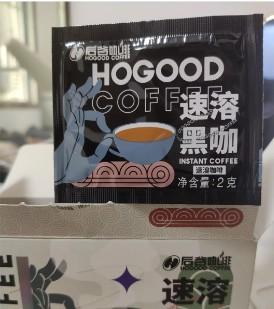
Hougu Coffee: Launched by a Leading Coffee Producer in Yunnan Province
Hongtian Industrial, a major coffee production enterprise in Yunnan Province, supplied coffee beans to Nestlé and Maxwell House—which entered China in the late 1980s—as well as Starbucks, which entered in the 1990s. The company grew rapidly alongside the expansion of these businesses. Around 2004, the company began researching and developing processed coffee products. In 2005, it launched the "Hougu" coffee brand, initiating a transition from a raw material supplier to a manufacturer of consumer products with its own brand.
Hougu Coffee: The World's Largest Single Instant Coffee Producer
In 2008, the company launched its own "national brand" and significantly reduced its supply of raw materials to Nestlé. Simultaneously, it built an instant coffee production line with an annual capacity of 3,000 tons, the largest in China. In 2011, it completed a production line with an annual capacity of 10,000 tons.
In February 2017, at a global promotional event themed "Charming Yunnan, Shared with the World," Chinese Foreign Minister Wang Yi highly praised Hougu Coffee, stating it was the best coffee he had tasted anywhere in the world.
In 2018, the company achieved an operating revenue of 5.69 billion yuan, ranking 10th among private enterprises in Yunnan Province. That same year, it completed a 20,000-ton coffee production line, making it the world's largest single producer of instant coffee.
The trajectory of Hougu Coffee encapsulates the process of Chinese enterprises transforming from "raw material suppliers" to "players with their own brands" within the global supply chain. Originally, it was in the position of supplying coffee beans to major international brands such as Nestlé, Starbucks, and Maxwell House. At this stage, high-quality coffee beans from Yunnan were merely incorporated into foreign brand products; neither the name of the production region nor the Chinese corporate brand ever reached the eyes of consumers. However, the significant reduction in supply to Nestlé in 2008 was a strategic move to independently take control of the high-value-added downstream business. Hougu grew rapidly, building a model that handled the entire industrial chain in-house—from cultivation and processing to brand management—and expanding to export its products to over 60 countries. Furthermore, by taking the lead in establishing the Asian Coffee Association, the company became involved in formulating international rules and standards, advancing its transition from a "rule follower" to a "rule maker."
The Asian Coffee Association Led by Hougu Coffee
In the global coffee industry, the Specialty Coffee Association of America (SCAA) and the Speciality Coffee Association of Europe (SCAE) have long dominated coffee culture and quality standards, leaving Asian coffee in a weak position both culturally and in terms of standards. Despite Asia accounting for over half of the global population and approximately one-third of global coffee production, its role in international coffee trade centered primarily on raw material exports, lacking pricing power and a strong voice.
Around 2015, spearheaded by the main coffee-producing regions of Yunnan Province, China, more than 20 Asian countries—including Nepal, Sri Lanka, Vietnam, and Thailand—jointly proposed the establishment of the Asian Coffee Association. Driven forward by various parties, formal registration was completed in July 2017 in Colombo, the capital of Sri Lanka, with the sole overseas representative office established in Kunming, China.
In 2016, coinciding with the 26th International Conference on Coffee Science, the 1st Asian Coffee Annual Conference was held in Mangshi, Yunnan Province, China. During this event, participating delegates from various countries designated Mangshi as the permanent host city for the Asian Coffee Annual Conference. This conference was hosted by Hougu Coffee and paved the way for the establishment of the association.
On November 27, 2017, the 2017 Asian Coffee Annual Conference opened in Mangshi, Yunnan Province, under the theme "Consultation, Contribution, and Shared Benefits." It was attended by 423 coffee researchers and entrepreneurs from 29 countries. At this venue, the Asian Coffee Association introduced the "Abody" certification for the first time, establishing it as the quality standard for Asian specialty coffee. (China News) This annual conference was co-hosted by the Asian Coffee Association and the China Coffee Engineering Research Center, organized by Hougu Coffee, and supported by organizations like the Yunnan Coffee Industry Association.
The following 13 countries were elected as the founding board member states:
- China (Chairing Country)
- South Korea
- Japan
- Vietnam
- Myanmar
- Malaysia
- Thailand
- Indonesia
- India
- Nepal
- Sri Lanka
- Saudi Arabia
- Turkey
Purpose and Significance of the Association
The establishment of the Asian Coffee Association aims to formulate independent Asian coffee standards, build an Asian coffee pricing system, cultivate Asian coffee brands, promote international poverty reduction through the coffee industry in Asia, and popularize Asian coffee culture.
Xiong Xiangren, Chairman of Hougu Coffee, spearheaded this initiative and served as the inaugural chairman. Subsequently, the association advanced efforts such as establishing unified Asian coffee quality grading standards, holding multilateral coffee industry matchmaking conferences, and launching the "Asian Coffee Revitalization Plan" to provide technical support to farmers across different countries. The association has continued to exist even after Hougu Coffee's financial crisis and bankruptcy restructuring. At the leadership transition conference in March 2026, the restructured Hougu Holdings (Yunnan) Co., Ltd. was re-elected as the chairing entity, and Mr. Zhang Hong newly assumed the role of Chairman of the Association's Board of Directors. In short, the establishment of the Asian Coffee Association was a movement to establish a distinct Asian voice against Western-dominated coffee industry standards, with Hougu Coffee serving as its standard-bearer.
コメント