
The mainstream “coffee” image was still instant coffee
The mainstream “coffee” image was still instant coffee
For many Chinese urban consumers in the 1990s, coffee meant Nestlé instant coffee, not espresso, hand drip, or café latte.
A Chinese retrospective on Starbucks’ China entry says that when Starbucks opened in Beijing in 1999, many Chinese people’s understanding of coffee was still basically Nescafé instant coffee.
At home , “coffee” meant Instant coffee, especially Nestlé-style 3-in-1 or soluble coffee.
In Hotels, “coffee” meant Brewed coffee, Western breakfast coffee, business hospitality.
In Urban cafés, Coffee + cake + simple meals + business/social space.
Café culture did not start from coffee taste.
It started more from space, status, atmosphere, and foreignness.
The 1990s café was often a “business/social room,” not a grab-and-go coffee shop
Before Starbucks normalized the paper-cup “third place” chain model, many Chinese cafés were large sit-down places.
They were places for:
- business meetings
- dates
- friends talking for a long time
- overseas Chinese / Taiwanese / Hong Kong businesspeople
- urban middle-class consumers trying a Western lifestyle
- people ordering coffee, tea, juice, steak, pasta, rice dishes, or desserts together
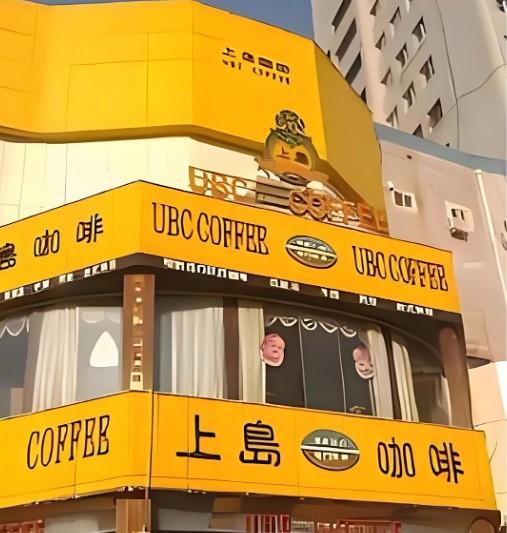
This is why cafés like 上岛咖啡 / UBC Coffee and 真锅咖啡 / Manabe Coffee are important.
They were not pure specialty coffee shops.
They were closer to coffee + light Western restaurant + lounge.
A later Chinese business analysis describes pre-Starbucks China coffee chains such as 上岛咖啡 and 真锅咖啡 as brands that expanded through franchising and helped build a high-end coffee-consumption image before Starbucks opened its first mainland store.
It characterizes UBC’s model as large stores, broad menus, coffee, juice, Chinese/Western light meals, and business-social positioning.
Taiwan and Japan mattered a lot
The most visible pre-Starbucks café chains in mainland China were not American-style at first.
They were strongly connected to Taiwanese and Japanese café/restaurant culture.
上岛咖啡 / UBC Coffee
UBC Coffee is usually associated with Taiwan-linked café culture in China. It expanded into mainland China in the late 1990s; several accounts place its mainland expansion around 1997.
Its appeal was not “excellent espresso.” Its appeal was:
- spacious interior
- leather chairs / quiet booths
- slightly luxurious atmosphere
- business meetings
- coffee plus meals
- “foreign but familiar” East Asian style
In other words, UBC helped make coffee into a middle-class meeting-space product.
真锅咖啡 / Manabe Coffee Manabe originated in Japan, became popular in Taiwan in the 1990s, and then moved into mainland China.
One Chinese encyclopedia-style account says Manabe’s first Shanghai shop opened in January 1998 on Huating Road, after the Taiwan-side business had already expanded significantly.
Manabe’s atmosphere was more “Japanese/Taiwanese kissaten-like” than Starbucks-like: sit down, stay long, order coffee with desserts or meals, enjoy a calm interior.
they were large, dimly-lit, often leather-armchair-and-dark-wood places that functioned as semi-private business meeting venues.
You'd order a 30–50 RMB pot of coffee (very expensive at the time) and sit for hours doing a deal.
They served full meals, served tea, and the coffee itself was secondary to the room.
These early cafés did not resemble modern specialty coffee shops.
They were where people could smoke, host formal meetings, and eat full meals—often a localized mix of Western steaks and Asian dishes.
The coffee itself was largely secondary to the privacy and status the physical space provided for business deals.
Tea was — and largely remained — the default.
Traditional teahouses (chaguan) were the actual mass-market equivalent social space, and they were having their own revival in the 90s, particularly in Chengdu and Hangzhou.
Cafés were a parallel, much smaller, status-coded world.
1990s mainland China had a small, urban, elite café scene dominated first by hotel lobbies and Häagen-Dazs, then from roughly 1997 onward by Taiwanese chains operating cafés as business-meeting parlors, with Starbucks arriving only at the very end of the decade.
コメント