
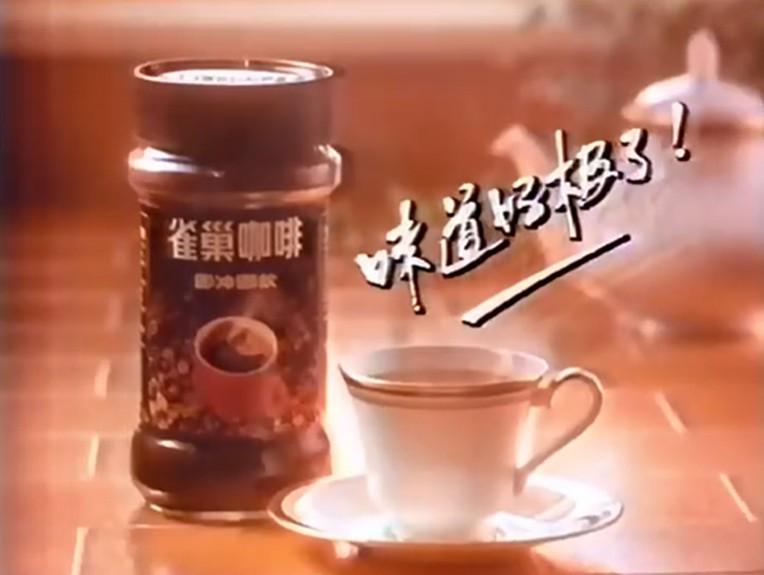
instant coffee was the first form of coffee to become truly mainstream
During China’s reform and opening-up era, instant coffee was the first form of coffee to become truly mainstream.
Before that, coffee existed in a few older urban settings such as Shanghai, but after 1978 it was reform-era consumer opening, foreign-brand entry, supermarket distribution, and mass advertising that turned coffee from a niche curiosity into a recognizable everydayproduct.
In practice, this meant that for many Chinese consumers, “coffee” initially meant instant coffee, not café espresso or fresh-ground beans.
A rough timeline looks like this. Maxwell House entered early, with business reporting indicating that Kraft brought the brand into China in 1984, and that its Guangzhou plant began production that year.
Nescafé followed in the late 1980s, and by Nestlé’s own account the company had been working in Yunnan since 1988;
China Daily also reports that Nescafé introduced instant coffee to the Chinese market in the 1980s and deliberately targeted young consumers.
university students became a core target group
The main social spaces of reform-era instant coffee were also distinctive.
Nescafé targeted students and young white-collar consumers, especially on campuses; China Daily says university students became a core target group, and later Nestlé cooperated with campus coffee shops in cities such as Beijing and Shanghai.
A 2017 Chinese business retrospective says Maxwell House entered China in 1984 and opened a simple coffee shop at Beijing University, serving drinks made from instant coffee powder; the same source also says Nestlé, after launching inland in 1988, sponsored university students, gave talks on campuses, and distributed instant-coffee promotional materials at universities before the big breakthrough of its “味道好极了” campaign in 1989.
Coffee became a symbol of a new urban lifestyle
Nestlé officially entered the Chinese market with greater force in the late 1980s, setting up an early presence in Heilongjiang in 1987 and establishing a major joint venture in Dongguan in 1988 to manufacture instant coffee domestically.
This localization allowed the brand to expand its retail footprint significantly:
**State-Owned Department Stores**
: Nescafé began appearing on the shelves of major department stores and early supermarkets in tier-one cities like Shanghai, Beijing, and Guangzhou.
**The Premium Gift Market**: Interestingly, during this period, the iconic Nescafé glass jars were heavily marketed and purchased primarily as high-status gifts rather than for everyday personal consumption. Bringing a glass jar of Nescafé to a family visit became a symbol of modern, sophisticated taste and a higher quality of life
3-in-1 coffee as the dominant form of coffee
More broadly, instant coffee spread through department stores, supermarkets, offices, and gift-box culture rather than through a mature café scene.
What made instant coffee succeed was not just foreign entry, but adaptation to Chinese consumption habits.
Early marketers found that simply selling bitter black coffee was a weak proposition in a tea-drinking society.
So brands leaned into sweeter, softer formats such as 1+2 and 3-in-1 mixes, which reduced bitterness and made coffee easy to prepare with just hot water.
Instant and flavored 3-in-1 coffee as the dominant form of coffee in China before 2000, especially in the 1990s.
Supply Chain
Another important layer is the link between instant coffee and China’s new domestic coffee supply chain.
Nestlé says it began working in Yunnan in 1988, and later reporting notes that by 1992 Nestlé had established a factory in Dongguan using Yunnan beans as a major raw material.
This matters because reform-era instant coffee was not only an imported taste; it also helped create the commercial logic for expanding coffee cultivation in Yunnan.
That supply relationship shaped Chinese coffee for years afterward.
Yunnan's coffee and rubber trader Xiongxiangru traded coffee bean form 1987 to 1996.
he later described as the period when he made his “first pot of gold” and came to believe that most profits in the Yunnan coffee business were being captured by foreign firms buying raw material.
In 1997 he shifted from trade into industry and founded Dehong Hongtian Industrial Group (德宏宏天实业集团), marking his move into large-scale processing and industrial operations.
Originally, the habit of drinking coffee was rare in China outside of a few cities like Shanghai, but instant coffee helped establish the culture nationwide. It was also during this period, leading up to around 2000, that Nestlé drove the growth of the coffee industry in Yunnan—China's largest coffee-producing region—which in turn fostered the rise of companies like Hongtian Industrial that sell coffee beans to Nestlé.
コメント